

A low quotation can conceal fabric substitutions, uneven sizing, weak seams, colour variation and missed delivery gates. Use a measurable specification, a signed sample and defined inspection controls to compare suppliers before you commit to a bulk order.
Key takeaways
- Specify fabric blend, weight and performance before requesting quotations.
- Check seam strength, measurements and colour consistency across production samples.
- Wash and test decorated samples before approving bulk production.
- Confirm capacity, production route, licences, lead times and payment terms in writing.
Match the fabric specification to the work, not just the GSM
Choose the fabric for the job before comparing T-shirt manufacturers in Bangalore. Use breathable cotton or jersey for office uniforms and events, cotton-polyester blends for easier care, polyester or performance fabric for sports and field work, and durable pique or technical knits for repeated industrial use.
| Use | Suitable fabric | Check before ordering |
|---|---|---|
| Office or event | Cotton jersey | Breathability, opacity, hand feel and colour stability |
| Easy-care uniform | Cotton-polyester blend | Fibre ratio, drying time and pilling resistance |
| Sports or field work | Polyester or performance knit | Moisture management, drying time and snag resistance |
| Industrial use | Pique or technical knit | Abrasion resistance, dimensional stability and seam durability |
Compare fabric composition and tolerance, knit construction, fabric width, finish, yarn count or fabric quality, opacity, hand feel, drying time and pilling resistance. Specify GSM with a tolerance, such as 180 GSM ±5%; two 180 GSM fabrics can differ sharply in opacity and dimensional stability.
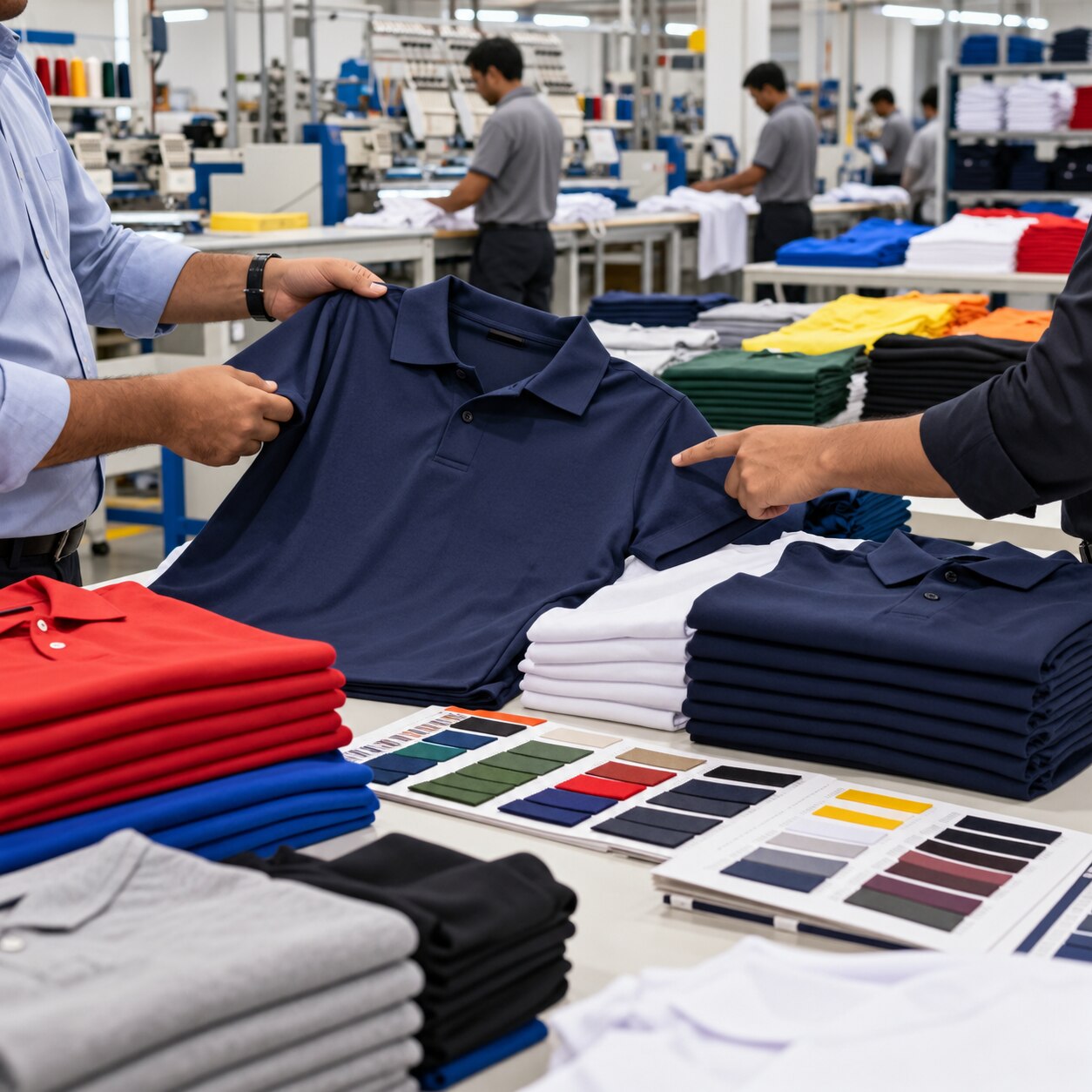
Write the complete specification in the purchase order, never only “180 GSM cotton.” Include composition, construction, width, finish, colour standard and pilling limit. For dark colours, approve a lab dip or knitted-fabric strike-off and retain the swatch.
Require ISO 5077 dimensional-change testing after a stated ISO 6330 wash and drying procedure. State five washes and maximum changes for body length, chest, sleeve and collar. Set separate numerical colourfastness limits for ISO 105-C06 laundering, ISO 105-X12 wet and dry rubbing, perspiration and light exposure.
Inspect construction, size control and garment consistency
Reject a garment that looks neat from the outside but has weak construction inside. Stretch the collar to check collar rib recovery: it must return smoothly without waviness. Inspect shoulder taping, neck binding, sleeve hems, side seams and bartacks for strength and clean finishing.
| Part | What to inspect | Failure sign |
|---|---|---|
| Collar | Symmetry, rib recovery and attachment | Wavy rib or uneven neckline |
| Seams | Straight lines and even stitch density | Skipped stitches or drifting seams |
| Sleeves | Hem width and stitch security | Puckering or uneven openings |
| Inside finish | Thread ends and loose-thread control | Untrimmed threads or unraveling |
| Side seams | Alignment before and after washing | Twisting or spiralling panels |
| Reinforcement | Bartacks at stress points | Missing or poorly anchored bartacks |
Wash one garment before approval. A side seam that twists after washing signals pattern, cutting or fabric-tension control problems, not a minor cosmetic issue.
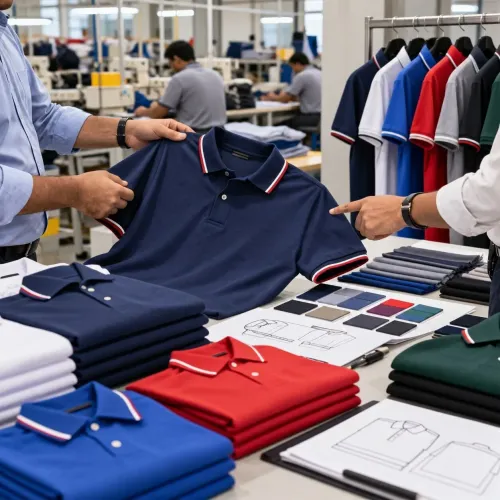
Approve a graded measurement chart for every size. Record chest, body length, shoulder width, sleeve length, sleeve opening and collar width, with a tolerance beside each measurement. Seal the pre-production garment to lock the pattern, collar shape, seam construction, labels and placement details.
The supplier must compare every production size with that signed chart rather than relying on visual similarity.
Ask for roll numbers on the cutting plan, roll-wise shade segregation and bundle records linking cut pieces to each roll. For repeat orders, retain the approved physical standard and a version-controlled technical pack containing the bill of materials and construction details.
That record prevents an unapproved collar, shade or measurement change from becoming the next “standard.”
Make the pre-production sample prove wash and decoration performance
Do not authorise bulk cutting until a sealed pre-production sample passes the agreed wash and decoration checks. Wash it using the specified programme, temperature, detergent, drying method and number of cycles; then compare the results with the signed measurement chart.
- Measure body length, chest, sleeve and collar before and after washing. Record shrinkage during shrinkage testing instead of accepting a claim that the garment is “pre-shrunk.” ISO 5077 dimensional-change testing after an ISO 6330 wash and drying procedure gives you a defined method.
- Rub the washed garment against a white test cloth to check colour bleeding. Inspect pilling, seam strength, collar recovery and fabric distortion.
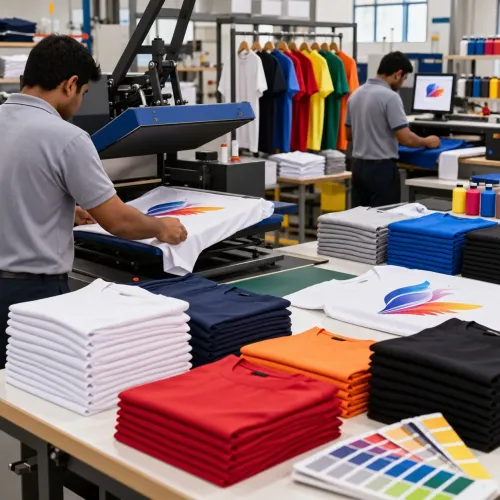
- Test the actual decorated garment, not a separate fabric swatch. Confirm print adhesion before approving production.
| Method | Artwork and finish | Commercial checks |
|---|---|---|
| Screen printing | Best suited to bold artwork and controlled colour counts; ink hand feel depends on the print system | Confirm colour count, minimum order quantity and lead time |
| DTF | Handles detailed or multi-colour artwork with a film-based finish | Check film adhesion, hand feel, minimum order quantity and turnaround |
| DTG | Suits detailed, full-colour artwork directly on suitable fabric | Check fabric compatibility, wash durability, colour limits and lead time |
| Embroidery | Creates a raised thread finish; fine details can close up | Confirm stitch count, thread colours, placement, minimum order quantity and lead time |
Wash the decorated sample and inspect cracking, peeling, bleeding, puckering, thread distortion and logo placement. Approve the artwork file, placement measurements, thread or ink specification and replacement process.
Sign the sample’s measurement chart, shade, decoration, label wording and packing details before calling it the production reference. Request recent laboratory reports naming the exact composition, colour, sample, test date and laboratory, and verify that the laboratory’s accreditation scope covers the tests. Reject reports for another shade, composition or season.
Verify the supplier’s identity, capacity and production route
A valid GSTIN does not prove that the quoted Bangalore premises contains a sewing line. Complete GSTIN verification on the GST portal, then compare the returned legal name, trade name, registration status, taxpayer type and principal place of business with the quotation and factory address.
An Udyam Registration certificate confirms identity and MSME status; it does not demonstrate sewing capacity. Ask for the manufacturing address, number of active sewing lines, typical monthly output and percentage of work subcontracted.
Write the production route into the quotation:
- Fabric booking or knitting, dyeing and lab-dip approval
- Trims, size-set or pre-production sample, cutting and sewing
- Printing, embroidery, inspection, rework, packing and transport
Name every subcontractor, location and quality responsibility. A sample room that handles 50 pieces may not control a 1,000-piece order.
| Evidence to request | What it establishes | What it does not establish |
|---|---|---|
| Factory visit and line count | Physical sewing capacity | Guaranteed delivery |
| Monthly output and subcontracting percentage | Available production route | Consistent quality |
| Dated production schedule | Lead-time control | Completed inspection |
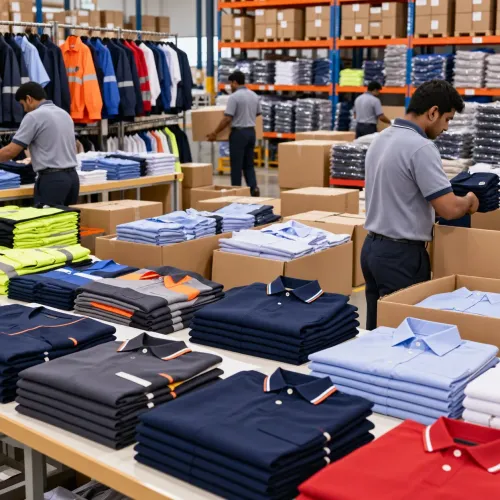
Before placing the order, define the lot, sample size, inspection stage, measurement method and acceptance numbers for critical, major and minor defects. ISO 2859-1 AQL provides a sampling scheme, not a promise that every garment is defect-free. Record the signed pre-production garment, graded measurement chart and tolerances as the production reference.
Lock the commercial agreement before comparing quotations
A quotation becomes comparable only after every supplier prices the same specification: fabric, graded size chart, approved colour reference, decoration method, quantities by size, labels, packing method and delivery address. Otherwise, the lowest figure may simply exclude costs another supplier has included.
| Commercial control | Evidence to require | Risk prevented |
|---|---|---|
| Fabric and garment | Technical pack, approved sample, colour swatch and bill of materials | Unapproved substitutions |
| Delivery schedule | Dated gates for fabric, dyeing, lab dip, sample approval, cutting, production, decoration, inspection, rework and dispatch | Untraceable delays |
| Quality limits | Maximum shrinkage, colourfastness limits, acceptable defects and inspection plan | Arguments over acceptance |
| Decoration | Placement tolerances, approved wash-test sample and replacement process | Peeling, bleeding or misplaced logos |
| Remedies | Defect replacement terms, replacement deadline and responsibility for freight or rework | Paying to correct the supplier’s error |
Attach the signed approved sample, artwork, colour swatch, technical pack, bill of materials and inspection plan to the purchase order. State the wash procedure used to assess shrinkage, the maximum change for each measured area, the colourfastness limits, and which defects qualify for rejection.
Ask each supplier to confirm the full delivery schedule in writing, not just “30 days.” Colors Inc becomes easier to evaluate when it provides measurable evidence such as line capacity, inspection records, the approved sample and dated production gates.
For repeat orders, assign a revision number to every change in fabric, collar, logo placement, label or packing. Keep the physical sample and digital pack together so the next batch cannot be judged against an outdated standard.
Related service
college uniforms We undertake uniforms stitching for both men and Women View service → |
Frequently asked questions
Is GSM enough to compare bulk T-shirt fabrics?
No. Match the fabric to the job by checking fibre blend, knit type, breathability, care requirements, colourfastness and performance, not GSM alone.
What should you inspect in a bulk T-shirt sample?
Inspect seam construction, stitch quality, measurements against the size chart, collar recovery, sleeve symmetry, hems and consistency across several garments.
How can a pre-production sample test decoration performance?
Wash the decorated sample using the intended care method, then check print cracking, peeling, colour change, shrinkage and embroidery distortion before approving production.
What should you verify about a T-shirt manufacturer in Bangalore?
Verify the legal business identity, production capacity, factory or subcontracting route, sample process, lead time, quality controls and documents relevant to the order.
Which commercial terms belong in a bulk T-shirt agreement?
Record fabric specifications, size quantities, colour references, decoration details, tolerances, inspection rules, delivery dates, replacement terms, taxes, freight and payment milestones.