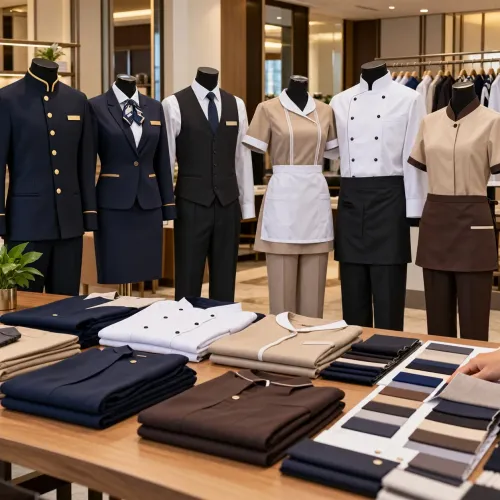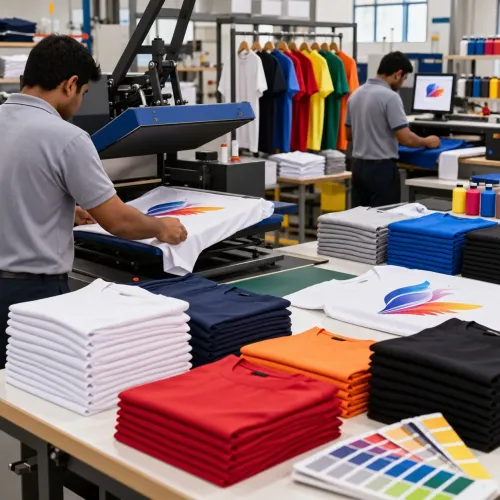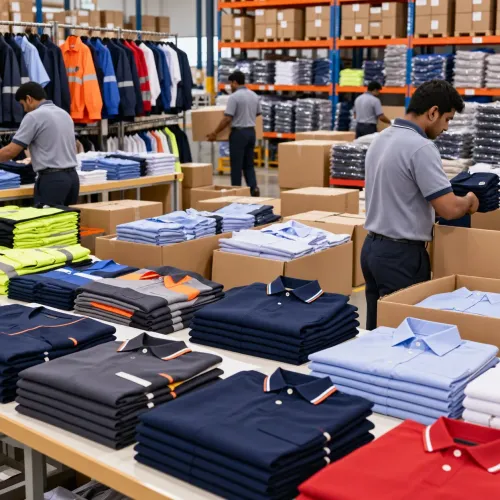


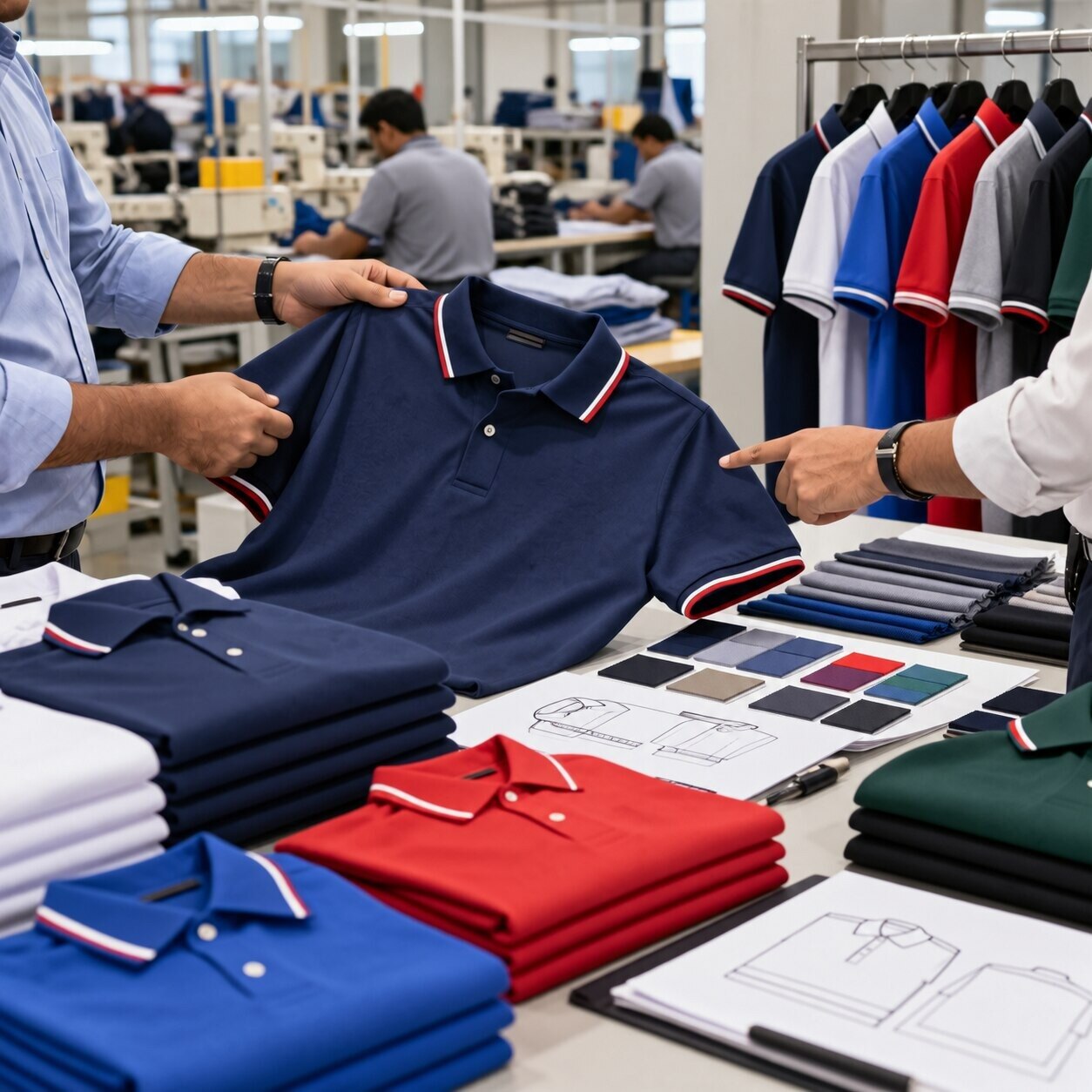
The better garment depends on whether the wearer is moving, sweating, meeting customers, supervising a site or working inside a controlled plant area. By the end, you can assign each shirt type to the right task, specify fabrics and construction details, and avoid confusing a branded uniform with certified protective clothing.
Key takeaways
- Choose collar T-shirts for movement-heavy engineering work.
- Choose lightweight button shirts for formal client contact and supervision.
- Specify breathable, colourfast fabric for heat, rain, dust and washing.
- Treat shirts as uniforms, not substitutes for helmets, vests or safety footwear.
Choose by Work Activity, Not by Shirt Preference
The stronger default depends on the job: choose knit collar T-shirts for movement-heavy engineering work and lightweight woven button shirts for formal contact and supervision.
| Garment | Stretch and movement | Heat, drying and durability | Appearance |
|---|---|---|---|
| Knit collar T-shirt | Stretches across the shoulders for reaching, bending and equipment handling; comfortable for climbing and driving | Breathes well in a suitable pique, dries quickly in a polyester blend and tolerates repeated washing; heavy fabric can retain heat | Branded and practical, but too casual for some customer meetings |
| Lightweight woven button shirt | Needs back width and armhole ease; a fitted cut can restrict climbing, driving or overhead work | A back pleat or relaxed fit improves airflow; lightweight blends dry faster than tightly woven cotton and resist shape loss | Sharper and more formal, with clearer role distinction |
For collar T-shirts in Bangalore, use the knit option for workshop work, maintenance, warehouse duties and indoor plant-floor activity. Repeated reaching and bending expose a stiff shirt quickly through pulled buttons, split seams and restricted movement.
Choose button shirts for work in Bangalore when crews attend client visits, site inspections, plant supervision or office coordination. A polo can look underdressed in a customer meeting, while a fitted button shirt becomes a poor choice for constant physical work.
The practical compromise is to issue both garments and define wear rules: collar T-shirts for movement-heavy shifts, button shirts for formal contact and supervisory duties. Neither wins across every task.
Match Sleeve, Fit and Details to Site Movement
For bending, climbing, driving and tool carrying, choose freedom across the shoulders, secure closures and enough coverage to prevent exposure under a harness.
| Feature | Short sleeve | Long sleeve |
|---|---|---|
| Sleeve exposure | Releases heat; leaves forearms open to sun, dust and minor abrasion | Covers forearms; needs a roll-up tab or secure cuff |
| Best use | Indoor plant floors, workshops and repeated arm movement | Outdoor inspections, construction team apparel in Bangalore and dusty sites |
| Main failure | Sunburn, scratches and grime on exposed skin | Loose cuffs snag on tools or equipment |
Specify shoulder ease that lets you raise both arms without pulling the collar, armholes that do not cut into the underarm, and enough back width for reaching. Set hem length so it stays tucked or covers the waist under a harness; a shirt that rides up will be rejected regardless of its label.
A relaxed button-shirt fit improves reach during inspections, driving and climbing. A stretch pique polo supports constant arm movement in workshops and warehouses, making it a practical base for engineering crew uniforms in Bangalore.
Use a collar with enough height to hold its shape, strong collar recovery after washing, a clean placket and buttons secured with tight stitching. For pens, inspection cards or small tools, require gusseted or bartacked chest pockets; an unreinforced patch pocket will sag or tear.
Approve finished-garment measurements, not M, L or XL alone:
- Check chest, shoulder, sleeve and garment length.
- Test bending, overhead reach, seat-belt use and harness fit.
- Keep a reserve of common sizes for replacements.
Specify Fabric for Heat, Rain, Dust and Repeated Washing
For collar T-shirts in Bangalore, start with a 180–220 GSM pique in polyester or polyester-cotton, then verify the knit and finish. GSM alone cannot predict service life.
| Fiber | Sweat and drying | Comfort, odour and washing |
|---|---|---|
| 100% cotton | Absorbs sweat and dries slowly after rain | Soft and comfortable, but shrinks and loses consistency with repeated washing |
| Polyester-cotton | Dries faster and controls shrinkage better | Balanced comfort; can retain odour if poorly finished |
| Performance polyester | Dries fastest and keeps its shape | Light and useful for movement, but can retain odour and feel less natural |
Yarn quality, knit density, snag resistance, collar recovery and colourfastness matter more than choosing 200 instead of 220 GSM. Heavier fabric can retain more heat without lasting longer.
For button shirts for work in Bangalore, choose lightweight woven cloth with a back pleat, side gussets or a relaxed engineering fit. Avoid tightly woven cotton for rain-prone travel: it feels comfortable initially but dries slowly after perspiration or a downpour.
Issue a separate breathable rain shell. Neither shirt is rainwear, and a saturated cotton shirt stays clammy beneath a waterproof layer.
Run a wash-and-wear trial using the actual household or commercial laundry process. After repeated washes, inspect:
- Collar recovery, seam twisting and shrinkage
- Pilling, shade change and logo adhesion
- Pocket sag and fabric distortion
Use ISO 15797 as a reference for industrial laundering, but still run the buyer’s own wash test.
Keep Uniform Choice Separate from PPE Compliance
A polo collar or button front provides no protection against arc flash, chemicals, flame, high heat, sharp edges or vehicle hazards. Both are ordinary uniform garments, not substitutes for the PPE selected through your risk assessment.
Map either shirt to the required hard hat, safety footwear, gloves, harness, safety vest and reflective jacket. For active traffic, lifting equipment or construction zones, a bright shirt is not high-visibility PPE.
For construction team apparel in bangalore, specify an ISO 20471 garment separately and request:
- The tested visibility class, certificate or test report, and fabric designation
- The minimum visible background and retroreflective material configuration
- The care limitations, including permitted washing process and contamination controls
- Confirmation that logos do not cover reflective tape and that tape cannot be removed
Reflective tape added as decoration does not establish ISO 20471 compliance. A logo placed over tape, removed tape or incorrect laundering can change the tested configuration and reduce visibility performance.
Engineering crew uniforms in bangalore should therefore treat a polo or button shirt as a base layer beneath the specified vest or jacket, not as the protective system. Select the shirt only when the combined layers preserve movement, visibility, harness fit and heat management.
A cotton shirt saturated by monsoon rain can stay clammy under a waterproof outer layer; a polo does not replace certified rain protection. Keep ordinary uniforming separate from protective clothing in the purchase specification, inspection record and replacement process.
Turn the Comparison into a Uniform Specification
Make the purchase by task, not by one universal shirt: collar T shirts versus button shirts in Bangalore works best as a split wardrobe.
| Task | Heat and movement | Contact or hierarchy | Recommended garment |
|---|---|---|---|
| Workshop, maintenance, warehouse | High movement and heat | Internal work | Polo |
| Plant-floor supervisor | Moderate movement | Must identify supervisor | Polo or button shirt with distinct shade |
| Site inspection | Heat, dust and walking | Client or contractor contact | Lightweight button shirt |
| Client visit or office coordination | Lower movement | Formal contact | Button shirt |
| Construction or specialist crew | Heat plus PPE | Specialist identification | Polo or button shirt under specified PPE; use a distinct colour |
Keep colour, collar and logo decisions separate from safety requirements. A bright shirt is not high-visibility PPE, and neither garment protects against arc flash, chemicals, flame or impact.
- Specify fibre blend, finished GSM range, shade standard, seam strength, pocket reinforcement and collar structure.
- Record button security, logo method, finished chest, shoulder, sleeve and length tolerances, wash instructions and replacement policy.
- Use embroidery on pique after testing density; it lasts well, but dense stitching can stiffen or distort the knit.
- Prefer a small embroidery, woven badge or controlled transfer for lightweight button shirts, where large embroidery can pucker the front.
Trial one polo, one button shirt and the actual PPE combination. Wash them repeatedly through the intended laundry process, then inspect collar recovery, seam twisting, shade change, pilling, logo adhesion, pocket sag and shrinkage during field wear. Use ISO 15797 when industrial laundering applies, but test your own process too.
For engineering crew uniforms in Bangalore and construction team apparel in Bangalore, Colors Inc can turn the activity split into matched specifications, size sets and production samples. Choose polos for movement-heavy indoor work, button shirts for formal contact and supervision, and separately specify PPE for hazards.
Frequently asked questions
Are collar T-shirts or button shirts better for engineering crews in Bangalore?
Choose collar T-shirts for movement-heavy site work and lightweight woven button shirts for formal contact, supervision and client-facing duties.
What shirt details suit engineering worksite movement?
Select sleeves, fit, collar construction, pockets and closures that allow reaching, bending and climbing without loose fabric catching on equipment.
Which fabric should you specify for Bangalore engineering uniforms?
Specify breathable, colourfast fabric that handles heat, monsoon moisture, dust and repeated industrial washing without excessive shrinkage or fading.
Do uniform shirts replace PPE on a construction site?
No. Shirts do not replace helmets, high-visibility vests, safety footwear, gloves, eye protection or other PPE required by the task and site risk assessment.