

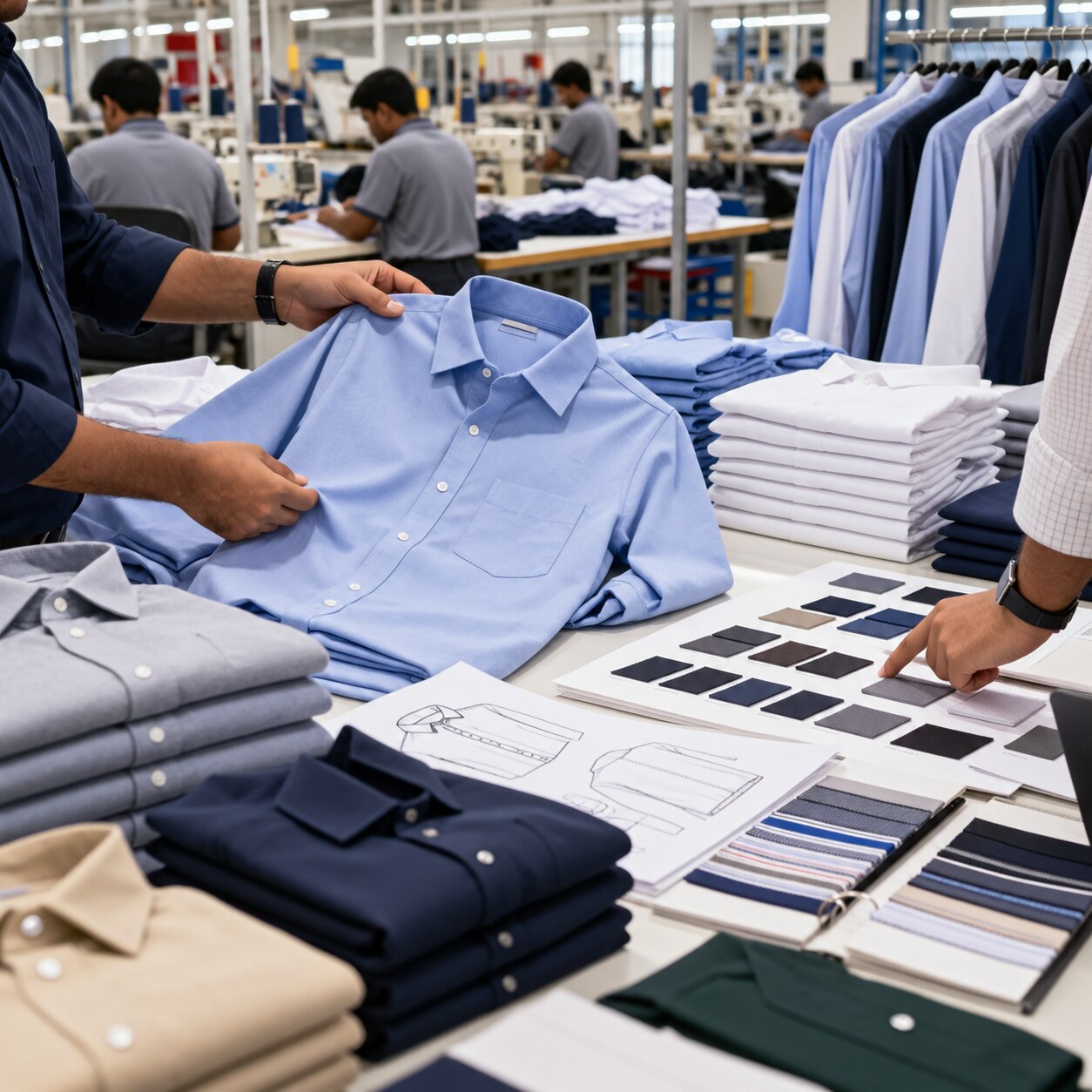
A custom shirt order becomes difficult when a sketch, headcount and delivery date are treated as a complete production brief. By the end, you will know what to specify, how manufacturers convert it into repeatable production, how to approve samples, and how to compare suppliers beyond the quoted per-shirt price.
Key takeaways
- Specify fabric, measurements, construction, branding and delivery requirements before requesting prices.
- Request a size-set sample and approve measurements before bulk cutting begins.
- Compare quotations by inclusions, tolerances, lead time, quality controls and repeat-order terms.
- Record approved specifications so repeat orders match the first production run.
How a custom shirt brief becomes a production-ready specification
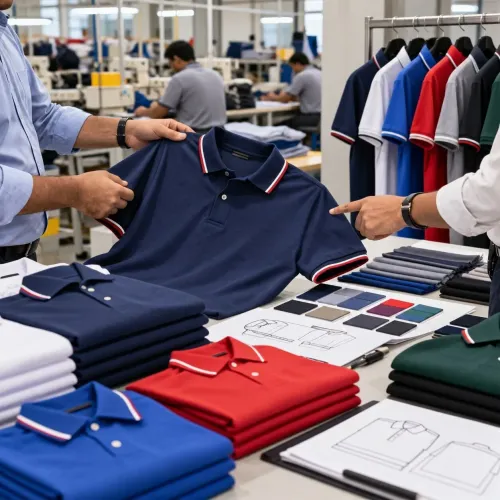
A firm price needs more than a sketch or reference garment. The manufacturer must turn the custom shirt design into a technical pack that removes ambiguity from fit, construction, materials, branding and delivery.
- Record shirt measurements for every size, including chest, waist, shoulder, sleeve, shirt length and collar circumference. Add a tolerance table and identify the inspection method; a chest tolerance is not automatically suitable for a collar or sleeve.
- Specify fabric selection by composition, weight, weave, colour reference and finish. Name the acceptable colour standard, because “navy” can produce visibly different results between fabric lots.
- Define the construction: collar shape and interlining, cuff design, pocket dimensions and placement, placket width, seam allowances, stitch type, button material and buttonhole size.
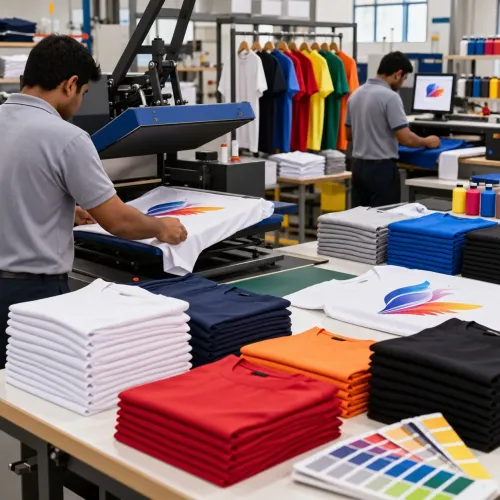
- Supply production artwork for each logo. Embroidery needs a digitised file, thread references, stitch density and placement diagram; printing needs separated artwork, ink or transfer details and curing instructions.
- State labels, care instructions, folding method, packaging units and carton markings. Approve a sample alongside the measurement chart and tolerance table before bulk cutting.
- Split the schedule into approval, fabric and trim procurement, production, inspection, rework and dispatch. Bangalore production can still wait for outside-sourced fabric, buttons, interlining or embroidery inputs.
Keep the approved sample, graded patterns, fabric references, logo files and size curve together. That record makes replenishment repeatable instead of turning an identical order into a fresh development exercise.
What to provide before requesting a quotation
A 5,000-shirt order is not one production run if it covers three styles and four colours. Each style-colour combination can require separate fabric, markers, trims and line setup, so give quantities by style, colour and size rather than only a purchase-order total.
State the wearer count, size range, fabric weight, composition, colour references, delivery location and required delivery date.
Send these inputs with the quotation request:
- Shirt type and construction: formal, polo, work shirt or T-shirt; collar, cuff, pocket, placket and button details.
- Branding method: embroidery, screen print, heat transfer or woven label, plus logo files in editable format and exact placement.
- Size curve: the number of shirts in each size, not just “S to 3XL”.
- Commercial split: quantity per style-colour combination, expected repeat quantities, packaging method and delivery schedule.
- Reference material: a technical drawing, measurement chart, reference garment or approved specification. A photograph alone leaves too much room for interpretation.
| Input | Weak detail | Quote-ready detail |
|---|---|---|
| Fabric | “Cotton shirt” | Composition, fabric weight, weave, finish and colour reference |
| Logo | “Add our logo” | Artwork file, branding method, dimensions and placement |
| Quantity | “5,000 pieces” | Style, colour and size breakdown with price-break request |
| Delivery | “As soon as possible” | Delivery address, required date and dispatch batches |
Ask the manufacturer to identify minimum quantities per style-colour combination and confirm whether the price includes sampling, grading, labels, packaging, freight and applicable taxes. Retain the final specification, approved sample, fabric reference and logo files so a repeat bulk shirt quotation does not become a fresh development exercise.
How large orders are planned and controlled on the production floor
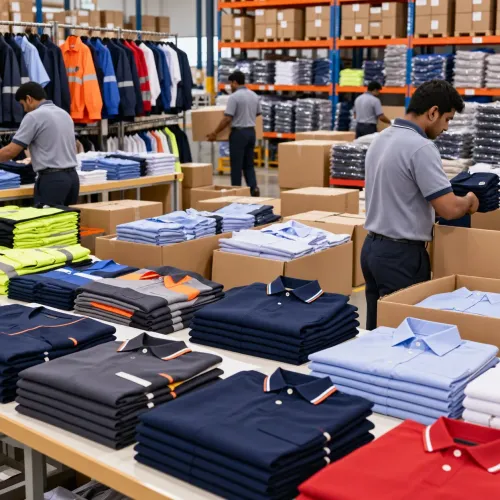
Five thousand shirts is not one production run. The factory breaks the order into combinations of style, fabric, colour and size curve, because each combination needs its own marker, fabric allocation, trims and sewing-line setup. A large quantity shirt production plan therefore controls quantities per style-colour combination, not just the purchase-order total.
A size survey gives the buyer’s actual demand before cutting begins. The manufacturer converts those figures into graded patterns, checks the size set against the approved measurements, and prepares a cutting plan that places the required sizes efficiently while keeping fabric lots separate.
This prevents a shortage of common sizes and reduces mixed shades within one department’s allocation.
The order is released through controlled checkpoints:
- Approve fabric, buttons, interlining, thread, labels and decoration references before bulk cutting.
- Inspect a pilot or first-off batch against the golden sample, including measurements, collar shape, stitching, button position and logo placement.
- Authorise the remaining cutting only after correcting recorded defects; otherwise, one pattern error can multiply across thousands of shirts.
- Balance stitching-line capacity against the release schedule, then inspect at cutting, sewing, finishing and packing stages.
- Pack by department, employee or size allocation, with style and colour identified on each carton.
For repeat orders, retain the approved sample, graded patterns, size curve, logo files and fabric-lot references. A colour name alone cannot control shade continuity: dye lots differ, so keep each colour lot together or mark separate lots clearly during packing.
Staged production takes longer, but it limits the cost of discovering a specification error after full cutting.
How to approve samples before bulk cutting
Authorise bulk cutting only after the approved sample, measurements and material references agree with the purchase specification. Record the decision in writing; verbal approval leaves room for substitutions in fabric shade, buttons, interlining, thread, labels or logo files.
1. Inspect the pre-production sample for collar shape, cuff construction, placket, pocket position, seam quality, button security, buttonhole function and logo placement. Confirm that it represents the intended design, not merely a similar shirt.
2. Approve a size-set approval covering every ordered size, including the smallest and largest. Measure chest, shirt length, shoulder, sleeve and collar circumference against the size chart and record each tolerance. One middle-size sample cannot reveal grading faults at the extremes.
3. Conduct shrinkage testing on the specified fabric before finalising measurements. Record the test method, wash or finishing conditions, pre-test dimensions and post-test dimensions; otherwise, shirts can leave production within tolerance and become undersized after laundering.
4. Designate one finished garment as the golden sample. Sign and date it, photograph key details, and store it with the approved measurement chart, tolerance table, decoration artwork and construction notes.
5. Seal and identify fabric and trim references with the golden sample. Include fabric composition or weight, colour reference, buttons, interlining, thread, labels and packaging details. Release fabric and trims first, inspect a pilot or first-off batch, then authorise the remaining cutting.
Check finished garments by size and colour, not only cartons. Document measurements, shade matching, stains, loose threads, logo position and packing labels before accepting the balance. Retain this complete approval file for replenishment orders.
How to compare manufacturers and protect repeat orders
The lowest per-shirt price is not the lowest-cost option if late delivery, uneven sizing or unfilled replacements disrupt work. A useful shirt manufacturer comparison measures evidence of delivery control, quality and after-sales responsibility.
| Check | Strong evidence | Warning sign |
|---|---|---|
| Delivery risk | Capacity plan, dispatch milestones and a named escalation contact | “We will try” with no dated production schedule |
| Quality | Golden sample, sealed fabric and trim references, measurement tolerances and documented inspections | Approval based only on a photograph |
| Stitching consistency | Size-set approval, graded patterns and inspection records across production batches | One attractive sample with no bulk-control method |
| Replacement shirts | Written replacement deadline, defect definition and responsibility for freight | Verbal promise to “adjust in the next order” |
Ask for minimum quantities and price breaks by style-colour combination, not only across the purchase-order total. A 5,000-shirt order split across several colours, constructions and sizes creates separate cutting, trim and line-setup risks.
Protect repeat uniform orders by requiring the supplier to retain the technical pack, approved sample, fabric lot reference, logo files, pattern version and size curve. Put the retention period and change-approval process in the purchase order; otherwise a changed interlining, fabric shade or artwork file can make the next batch look different.
Before appointing Colors Inc or another supplier, request two references for repeat orders and ask how they recorded defects, replacements and delivery delays. Compare the answers, not just the quotation: a slightly higher unit price can buy fewer emergency shipments and less internal sorting.
Related service
college uniforms We undertake uniforms stitching for both men and Women View service → |
Frequently asked questions
What information should you provide before requesting a custom shirt quotation?
Provide the shirt sketch or reference garment, fabric composition and weight, colour standard, size chart, construction details, branding artwork, quantity by size, packaging needs and delivery date.
How do manufacturers control large custom shirt orders?
They plan fabric and trims, issue a production specification, separate cutting and sewing stages, inspect measurements and workmanship, and track quantities through packing.
What should you approve before bulk cutting?
Approve the fabric, colour, fit, measurements, collar and cuff construction, seams, buttons, labels, embroidery or printing, and the finished sample for each required size.
How can you compare shirt manufacturers and protect repeat orders?
Compare like-for-like quotations, confirm tolerances and lead times, document approved samples and materials, and retain the technical pack for future purchase orders.