

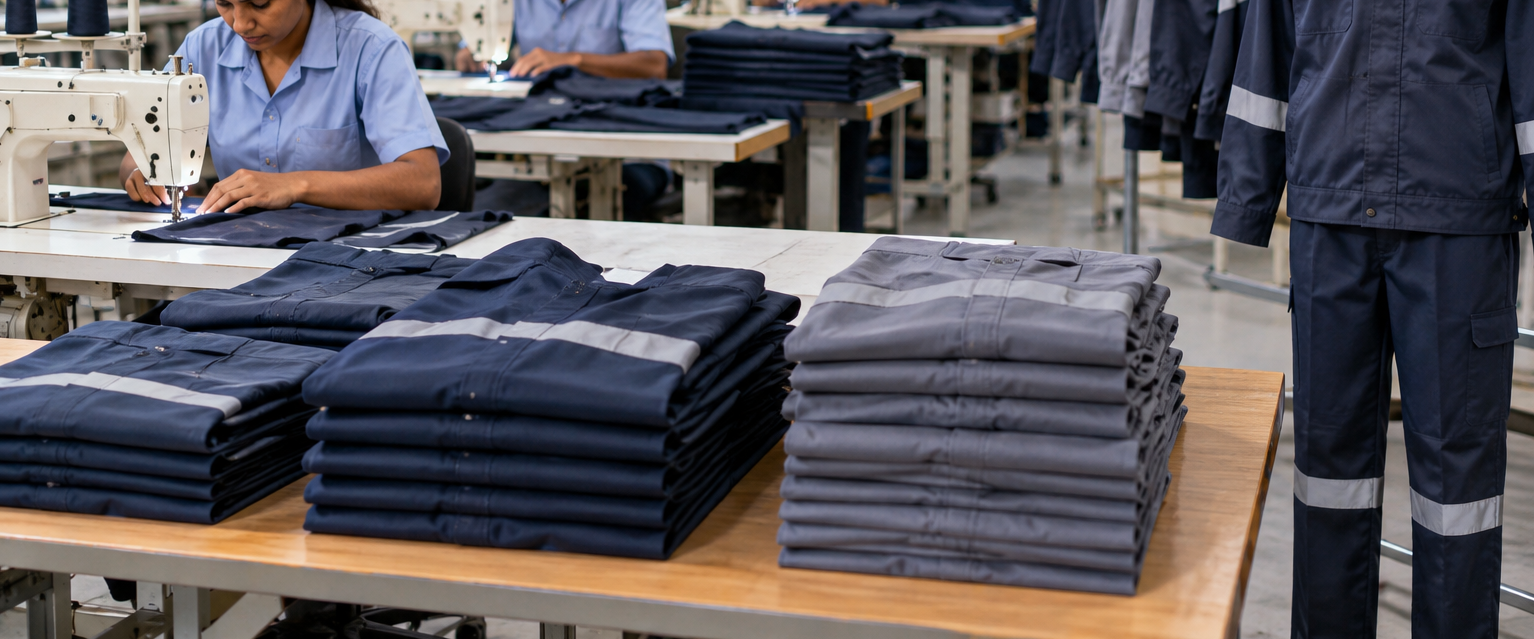
Introducing or replacing factory uniforms is a larger operational decision than it may initially appear. A manufacturer may need clothing for production workers, warehouse employees, maintenance teams, supervisors, quality personnel, and other departments, with each group potentially having different requirements.
Businesses looking for Factory uniforms Manufacturers in Bangalore should therefore prepare a detailed uniform brief before requesting final quotations.
Identify Who Will Wear Each Uniform
Start by listing employee categories and their working environments.
A typical manufacturing organization might include:
- Production employees
- Maintenance personnel
- Warehouse teams
- Quality-control staff
- Supervisors
- Facility personnel
- Dispatch teams
Some groups may be able to use the same garment with simple colour variations. Others may need a different specification because their tasks and working conditions differ.
Where jobs require certified protective clothing or personal protective equipment, those safety requirements must be assessed separately and should not be replaced by ordinary factory uniforms.
Define the Garment Specification
Avoid requesting a quotation for simply 500 factory uniforms.
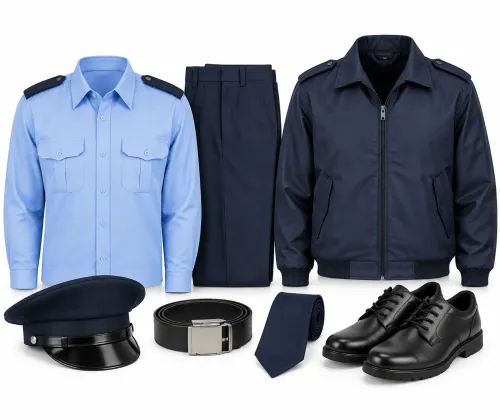
A useful specification should explain whether the requirement includes shirts, trousers, overalls, jackets, T-shirts, or other garments.
It should also describe fabric expectations, colours, pockets, closures, branding, department identification, and quantities.
The more precise the brief, the easier it becomes to compare suppliers fairly.
Build Sizing Into the Procurement Process
Factories often employ large and diverse workforces, making sizing one of the most important parts of bulk uniform ordering.
Collect sizes systematically rather than relying on estimates.
A fitting set containing representative sizes can help employees choose correctly. Procurement teams should then consolidate the final quantity required in each size.
A small allowance for replacements and new employees may also be useful.
Ask for a Pre-Production Sample
For substantial orders, approving a representative garment before bulk production can prevent expensive misunderstandings.
Inspect:
- Fabric
- Garment measurements
- Stitching
- Pocket position
- Logo placement
- Colour
- Closures
- Overall fit
Any agreed changes should be documented before full production begins.
Discuss Delivery Requirements Early
A new factory opening, employee onboarding program, rebranding exercise, or scheduled uniform replacement may have a fixed date.
The required delivery schedule should therefore be communicated when requesting the quotation, not after production is confirmed.
Organizations in Bangalore with multiple facilities elsewhere in Karnataka should also clarify whether uniforms need to be packed by employee, department, size, or destination.
Prepare for Repeat Requirements
A factory uniform program continues after the initial order.
Employees join and leave, garments become worn, departments expand, and sizes change. Ask whether the approved garment specifications can be retained for subsequent orders.
Consistent repeat production can be particularly important where the uniform forms part of a broader corporate identity.
Colors Inc provides customized uniform solutions for organizational requirements in Bangalore. Businesses preparing to approach the company or other Factory uniforms Manufacturers in Bangalore can make procurement more efficient by developing a complete requirement before seeking final commercial terms.
A uniform supplier should be evaluated on more than the initial piece price. Businesses should consider specification clarity, sample approval, size management, customization, production consistency, and repeat-order requirements.
For Bangalore's diverse manufacturing sector, a structured procurement process can reduce common problems such as incorrect sizing, inconsistent branding, unsuitable fabrics, and difficulty reproducing the same uniform later. The result is a factory uniform program built around actual workforce requirements rather than a one-time clothing purchase.