

A warehouse uniform has to survive lifting, bending, heat, dust, repeated washing and contact with equipment while still presenting a credible company image. By comparing garment construction with the tasks your team performs, you can decide who needs a formal shirt, who works better in a casual top and where protective workwear is the only safe option.
Key takeaways
- Choose knit or lightweight tops when bending, lifting and repeated movement dominate.
- Specify breathable fabric, secure closures, short tails and sleeves that cannot catch equipment.
- Use formal shirts for desk-facing, supervisory or customer-facing warehouse roles.
- Test garments through a full shift before approving a warehouse uniform order.
Start with the work, not the appearance
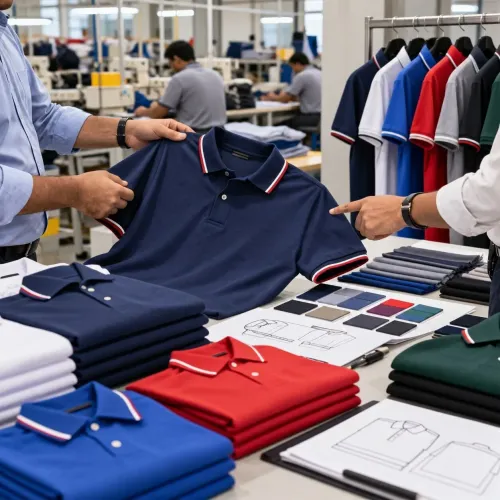
The practical question in formal shirts versus casual work tops warehouse in bangalore is not which garment looks sharper; it is which one survives the task. A formal shirt means a woven button-front shirt with a structured collar and cuffs. A casual work top includes a knit polo, collar T-shirt or lightweight button-front shirt.
| Task | Better choice | Reason |
|---|---|---|
| Lifting, bending and picking | Casual work top | Knit fabric follows reaching and repeated torso movement with less armhole strain. |
| Packing and loading | Casual work top | Fewer rigid parts reduce cuff and shirttail snagging around cartons, pallets and equipment. |
| Forklift operation | Casual work top | A close-fitting polo or collar T-shirt sits more securely under a seat belt or high-visibility vest. |
| Stock counting on the warehouse floor | Casual work top | It handles movement, sweat and frequent washing with less ironing labour. |
| Desk work inside the warehouse | Formal shirt | Woven fabric gives a sharper appearance for visitors, calls and cross-functional meetings. |
For warehouse staff shirts in bangalore, select the casual top for physical work unless customer contact is part of the shift. A formal shirt can work for counting or dispatch coordination when it has secure buttons, a buttoned or tabbed cuff, a shorter operational tail and enough back width for overhead reach.
Do not treat either garment as high-visibility PPE. A coloured shirt, reflective piping or small logo does not replace a compliant high-visibility garment. Compare cost per usable wear too: woven shirts often add ironing time, while knit tops usually simplify laundering and replacement.
How garment construction affects movement and safety
A formal shirt does not automatically restrict movement; a narrow armhole, low back ease, stiff collar stand or tight cuff does. During overhead reaching and carton lifting, those faults pull across the shoulders and encourage workers to unbutton sleeves or leave tails loose, creating new snag points.
Formal shirts also manage Bangalore heat differently. A 60/40 or 65/35 polyester-cotton woven dries faster and creases less than 100% cotton, but higher polyester content can retain odour and feel clammy in humid, poorly ventilated areas. A knit casual top usually flexes with bending and puts less stress on armhole seams.
| Option | Movement and heat | Warehouse risk |
|---|---|---|
| Formal woven shirt | Sharper appearance; less stretch; blend dries quickly | Loose cuffs, stiff collars and long tails can catch |
| Casual knit top | Easier reaching; fewer rigid components; tolerates repeated washing | Poor fit or loose fabric can still snag |
For warehouse staff shirts in Bangalore, inspect failure points while the wearer lifts a carton and wears a safety vest:
- Specify a buttoned cuff or adjustable tab, secure buttons and an operational-length tail.
- Use one internal-compartment chest pocket, or no pocket for scanner users; test it beside racking.
- Trial small embroidery or a durable transfer under the intended wash process; dense chest embroidery can rub under a harness.
What to specify in a practical casual work top
A practical casual work top should use a breathable knit or lightweight woven fabric, a collar that stays flat, and enough room across the back for overhead reaching. For warehouse staff shirts in Bangalore, specify the details below rather than choosing by appearance alone.
| Component | Specify | Why it matters |
|---|---|---|
| Collar | Soft rib-knit polo collar or low-profile collar T-shirt neckline | Stays comfortable under high-visibility outerwear and does not trap as much heat as a stiff collar stand. |
| Sleeve | Short sleeve ending above the elbow, or a flexible set-in sleeve with a generous armhole | Improves ventilation and reach without leaving loose fabric near equipment. |
| Fabric | Cotton-rich polyester blend, such as 60/40, with breathable knit construction and colourfast finishing | Cotton improves hand feel; polyester speeds drying and reduces shrinkage. Test odour retention in humid areas. |
| Placket | Two- or three-button placket with reinforced stitching | Opens the neck for ventilation and resists repeated pulling during dressing and movement. |
| Cuff | Soft rib cuff or a plain sleeve hem with twin-needle stitching | Avoids snagging and survives repeated washing better than a loose, stiff cuff. |
| One internal-compartment chest pocket, or no pocket for scanner users | Prevents protrusion and catches while lifting cartons or using racking. |
Ask for side-seam reinforcement and a hem that stays tucked only if the task requires it. Check pocket access while lifting, bending and operating a handheld terminal; a pocket that works on a hanger can obstruct movement on shift.
When a formal shirt still makes operational sense
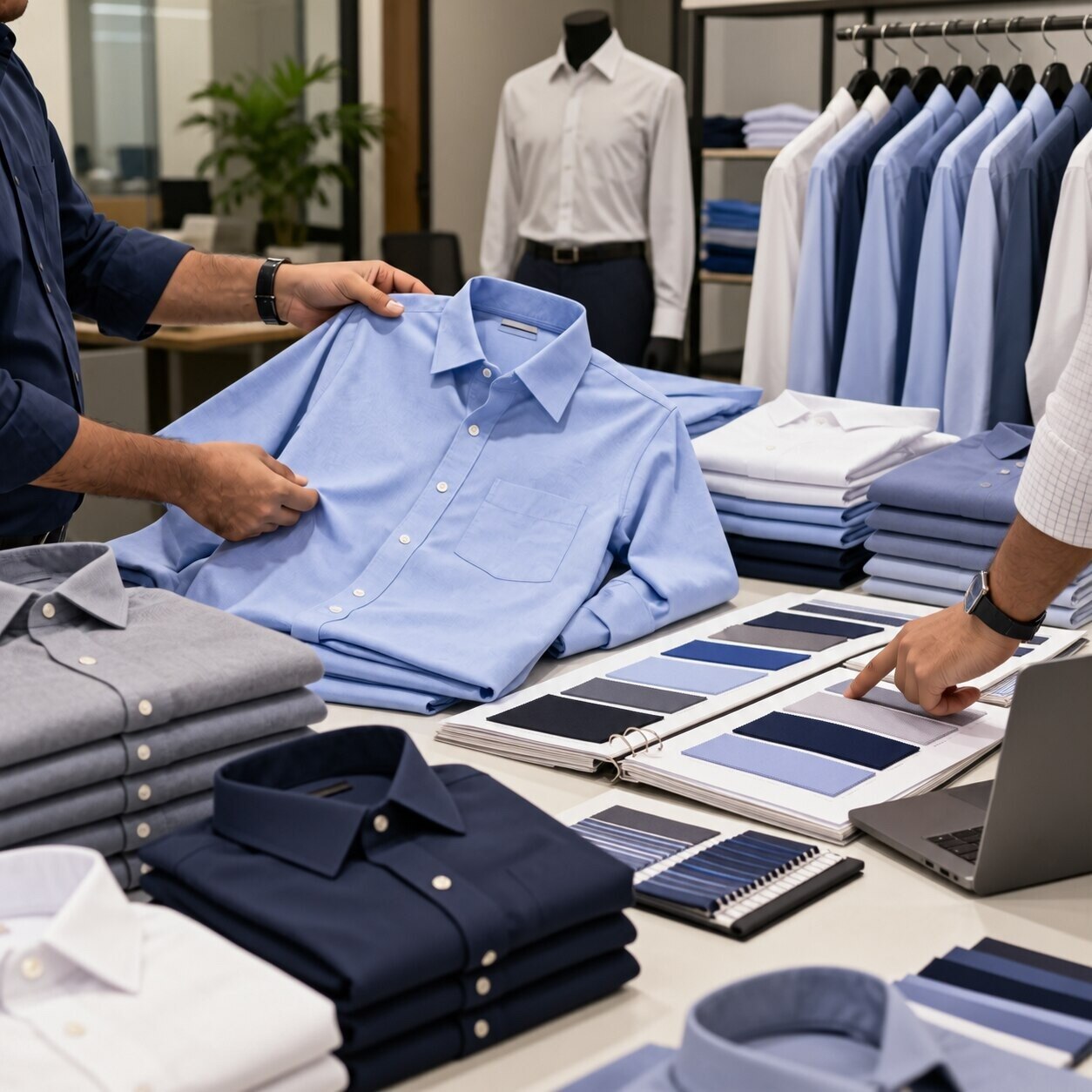
Formal shirts make operational sense when the wearer represents the warehouse more often than they handle loads. Supervisors meeting drivers, reception-facing staff greeting visitors, and dispatch employees handing orders to customers benefit from a consistent, recognisable appearance.
- Choose a formal shirt for supervisors who move between the floor, offices and client meetings, provided the fit allows overhead reach.
- Choose one for reception-facing teams whose work involves visitor registration, calls and escorted access rather than picking or packing.
- Choose one for customer-facing dispatch staff who verify consignments, resolve delivery questions or meet transport representatives.
- Issue one to site visitors when they need to look identifiable and professional without wearing a full office outfit.
A formal shirt is the wrong default for repeated lifting, bending, picking or forklift operation. Loose cuffs can catch on cartons, stiff collars can interfere with high-visibility vests, and a long untucked tail can snag on racking. Specify buttoned cuffs or adjustable tabs, secure buttons, a shorter operational tail and enough back width for reaching.
Formal shirts in Bangalore also carry a laundering cost: ironing and crease control can consume labour that a knit polo avoids. Compare cost per usable wear, replacement rate and laundry time before choosing formal work shirts in Bangalore.
| Option | Use formal shirt when | Control |
|---|---|---|
| Supervisor | Moving between floor and client meetings | Test overhead reach |
| Reception team | Greeting and directing visitors | Keep away from handling zones |
| Dispatch representative | Handing orders to customers | Secure cuffs and pockets |
| Site visitor | Entering for inspection or meeting | Add required safety gear |
Turn the choice into a measurable uniform specification
Approve a uniform against an acceptance sheet, not the phrase “premium fabric”. Ask warehouse uniform suppliers in Bangalore to state the fibre composition with tolerance, finished measurements, seam or stitch standard, colourfastness test, pilling grade, replacement terms and sample-approval process.
| Option | Measure before ordering | Main trade-off |
|---|---|---|
| Formal shirt | Chest, sleeve and armhole measurements before and after five washes; iron time per garment | Sharper appearance, but more ironing and stress at the armhole |
| Casual work top | Stretch recovery, collar stability, length and width after five washes | Easier movement and laundering, but less formal for visitors |
| Both | Seam opening, colour change, pilling, pocket access and logo adhesion after washing | The lowest purchase price can produce the highest replacement cost |
Run a wearer trial through one complete shift of lifting, bending, picking, packing, forklift operation, stock counting and desk work. Record restricted reach, collar or cuff discomfort, heat, snagging, pocket access, sweat marks and logo condition.
Use the facility’s actual detergent, wash temperature and drying method; compare cost per usable wear, replacement rate and laundering labour with formal shirts in Bangalore.
- Approve the sample only if post-wash dimensions stay within the agreed tolerance and no seam opens.
- Reject colours that expose warehouse dust immediately or show lint, salt marks and fading after washing.
- Specify high-visibility PPE separately; a bright shirt, reflective piping or small logo is not compliant protective clothing.
- Put the approved sample, measurement chart, fabric swatch and wash results into the purchase order. Colors Inc can use that record to keep stitched replacements consistent across sizes and batches.
Related service
college uniforms We undertake uniforms stitching for both men and Women View service → |
Frequently asked questions
Are casual work tops safer than formal shirts for warehouse staff?
They are the stronger choice when staff bend, lift and move repeatedly because knit or lightweight construction allows easier movement. Check sleeve fit, loose hems, buttons and snag points before approval.
What should you specify in a practical casual work top?
Specify breathable fabric, a suitable fit, secure neckline and closures, sleeves that stay clear of equipment, reinforced stress points and a wash method that preserves colour and shape.
When do formal shirts still make sense in a warehouse?
Choose formal shirts for supervisors, reception-facing staff, customer visits, office-linked roles or duties with limited lifting and equipment exposure.
How can you compare warehouse staff shirts in Bangalore before ordering?
Write a specification covering tasks, fabric, fit, closures, visibility, sizes, colours, washing, replacement quantities and trial results from a complete working shift.