

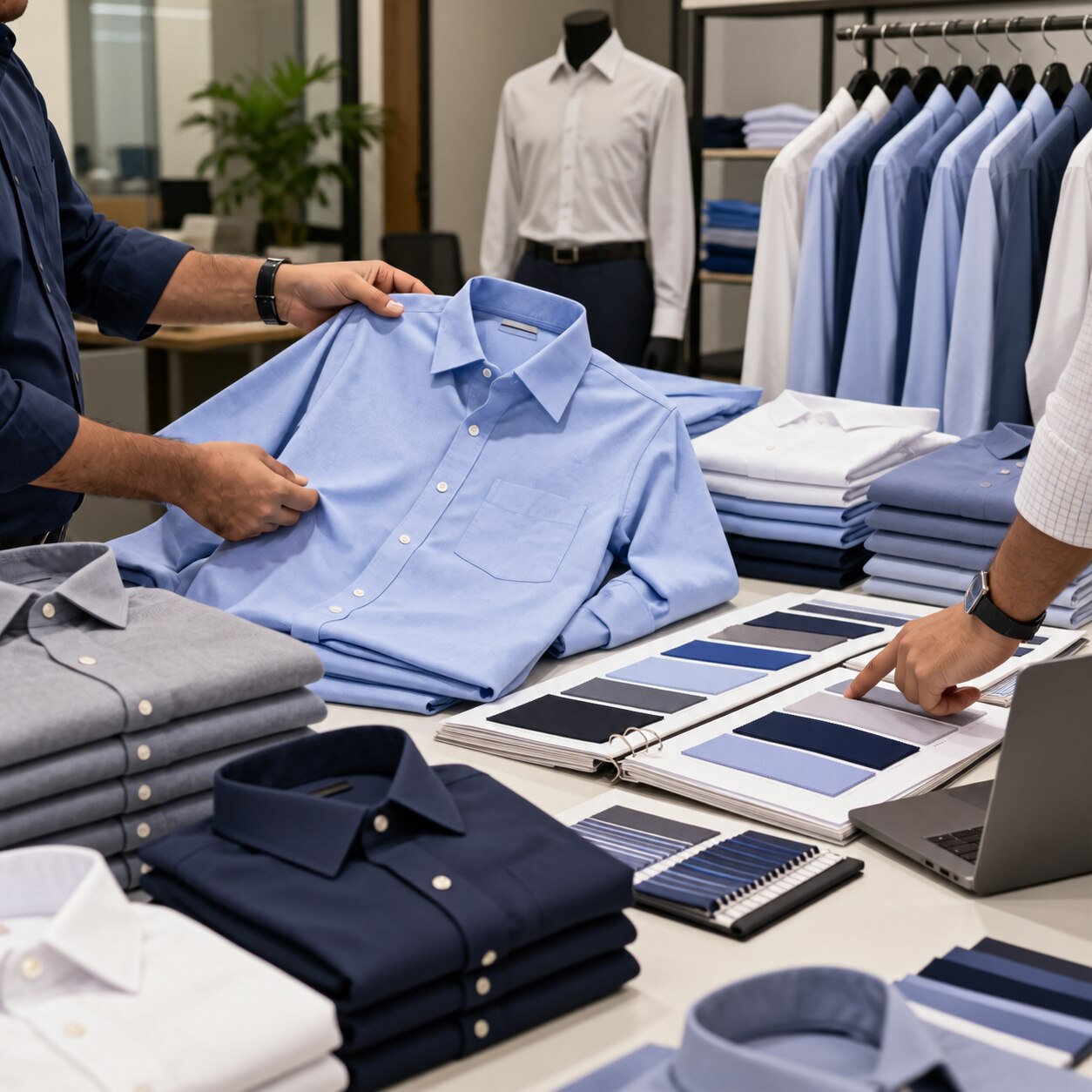
A low per-shirt quote does not tell you whether a supplier can hold the same fit, shade and construction through the first delivery and every replenishment. You will be able to qualify Bangalore manufacturers, compare fabric and workmanship, approve staff sizing, and protect the order with measurable specifications and acceptance terms.
Key takeaways
- Ask for production-floor evidence, machinery details, and comparable work orders.
- Compare fabrics by fibre content, GSM, colourfastness, shrinkage, and care requirements.
- Approve a fitted sample before bulk cutting and record every measurement.
- Compare landed costs, quality checks, lead times, and repeat-order terms.
Start with the manufacturer’s production capability, not the catalogue
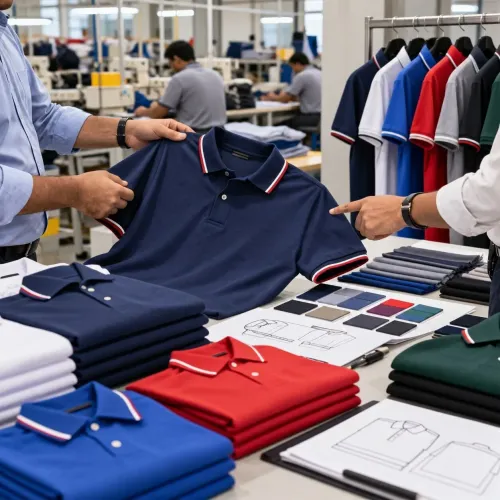
A catalogue proves style; it does not prove that a supplier cuts and stitches shirts. To separate a Bangalore manufacturer from a reseller, ask to see the production floor or a dated video, machinery list, in-house operations, and a recent work order for a comparable formal shirt.
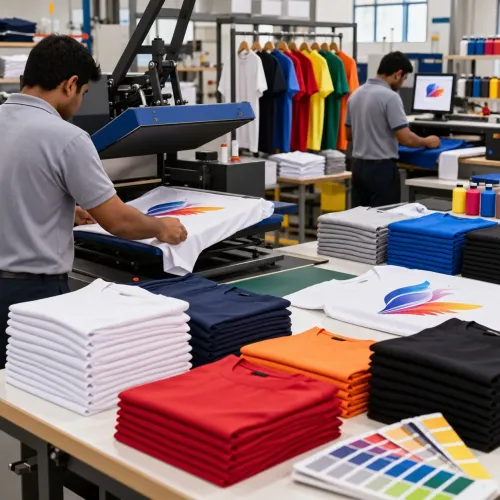
Confirm who performs cutting, fusing, buttonholes, embroidery, pressing and packing; these steps, not headline sewing numbers, create bottlenecks.
- Ask formal shirts manufacturers in Bangalore for production capacity tied to your exact construction, fabric, size mix and colour mix. Request output from a recent comparable order and the line’s current loading; a stated monthly total is weak evidence.
- Run a qualification order using your actual fabric, collar construction, logo method and packing method. Inspect the finished pieces for seam consistency, fused collar shape, buttonhole alignment, embroidery placement and pressing quality.
- Request a written production schedule showing approval, cutting, sewing, branding, inspection and dispatch dates. Check whether specialised work is performed in-house or handed to another unit, because subcontracting can extend the lead time.
- Record the minimum order quantity (MOQ) per style, fabric, colour and size where applicable. A low headline MOQ can conceal separate thresholds that make a staff-uniform order impractical.
- Ask for inspection records, rejected-piece handling and lot traceability. Retain the qualification sample and approved measurements so repeat production can be compared against a physical standard.
A supplier that cannot show comparable output, explain its bottlenecks or commit to a measurable schedule has not demonstrated production capability, regardless of how polished its catalogue looks.
Compare shirt fabric using measurable performance criteria
A comfortable office shirt needs a fibre blend, weight and construction suited to its climate and laundering schedule. Check fabric composition, GSM, weave and the opacity of formal shirts fabric rather than relying on labels such as “premium cotton” or “easy-care”.
| Criterion | What to compare | Why it matters |
|---|---|---|
| Fabric composition | Cotton, polyester, or a stated blend percentage | Cotton improves moisture comfort; polyester improves drying, durability and crease recovery |
| GSM | Measured mass per square metre, verified against the approved range | Low GSM can look transparent; high GSM can feel hot and restrict movement |
| Weave | Poplin, broadcloth or twill; inspect surface and yarn density | Tighter weaves resist show-through and abrasion; open weaves ventilate better |
| Opacity | Hold white and pale fabric against light, then test over an undershirt | Poor opacity exposes pockets, seams and body outlines |
Ask for independent verification when composition or weight affects price. ISO 1833 covers quantitative fibre analysis, while ISO 3801 covers mass per unit area; a catalogue is not a test report for the delivered lot.
Include shrinkage after washing and wrinkle-recovery results in the specification. Test pale shirts for perspiration, rubbing and laundering using ISO 105-E04, ISO 105-X12 and ISO 105-C06, with minimum grades written down.
Inspect the fused collar and cuffs after washing. Bubbling, curled points and lifted edge-stitching reveal unsuitable interlining, fusing or finishing, even when the fabric itself looks good. Retain a signed fabric cutting or lab dip and define the acceptable shade difference for later replenishment.
Define the shirt and prove the fit before bulk production
Approve a measured size set, not one pre-production shirt. Include the smallest, middle and largest ordered sizes in both men’s and women’s shirt cuts; grading mistakes often appear only at the extremes.
1. Issue a size chart with finished chest, waist, shoulder, sleeve, shirt length, collar and cuff measurements. State tolerances for every measurement, such as ±0.5 cm, and define movement allowance rather than leaving “comfortable fit” to interpretation.
2. Specify the collar shape, collar height, collar point length, cuff style, placket width, pocket position, button spacing, seam construction, thread colour and logo placement. Record the interlining type or its required stiffness and laundering performance.
3. Fit each size on representative staff members wearing normal office clothing. Check shoulder position, collar gap, arm movement, sleeve reach, shirt-tail coverage and button strain while standing, sitting and reaching.
4. Wash the approved samples using the intended care process before signing off. Inspect collar points, cuff edges, fused areas and plackets for bubbling, curling, distortion and stiffness loss; also check shrinkage and colour change.
5. Attach the approved pattern, grading rules, trim references, fabric specification and measurement chart to the purchase agreement. Define replacement or credit for out-of-tolerance garments, wrong sizes, shade variation and defective embroidery.
Record every correction on the fit sample and require written approval before cutting bulk fabric. A verbal fit decision cannot protect the next replenishment order.
Use samples and quality records to test real-world workmanship
Approve two physical checkpoints, not one. A pre-production sample confirms the construction, but size-set approval must cover the smallest, middle and largest ordered sizes; grading errors often appear only at the extremes. Record collar, chest, sleeve, shirt length, pocket, cuff and placket measurements, each with an agreed tolerance.
Inspect the sample and size set for:
- Straight seams, even topstitching, secure thread ends and consistent seam allowances.
- Smooth collar and cuff fusing, aligned plackets, correctly formed buttonholes and firmly attached buttons.
- Matching checks or stripes where specified, a level shirt hem and no puckering after pressing.
- Logo placement against a diagram showing distances from fixed points such as the collar edge, placket and pocket. Approve a decorated physical sample in at least one small and one large size.
Colour approval needs a signed fabric cutting or lab dip and a defined viewing condition; a screen image cannot control production shade. For white or pale shirts, write the required grades for perspiration, rubbing and laundering into the specification, referencing ISO 105-E04, ISO 105-X12 and ISO 105-C06.
Verify composition and fabric weight through ISO 1833 and ISO 3801 reports when those attributes affect price or comfort.
Ask Colors Inc, or any shortlisted supplier, to return quality records for incoming fabric, cutting, sewing, finishing and packing. Each record should identify the order, fabric lot, size, inspection date, measurements checked, defects found, rework and final acceptance. Keep the signed standard beside the delivery inspection so rejected pieces have an agreed reference.
Related service
college uniforms We undertake uniforms stitching for both men and Women View service → |
Compare the full quotation and secure repeat-order terms
Compare the total delivered cost, not the quoted shirt rate. A formal shirt quotation is comparable only when every supplier prices the same fabric, construction, branding, sizes, quantities and delivery point.
| Cost line | What to compare | Confirm before approval |
|---|---|---|
| Fabric and trims | Composition, GSM, buttons, thread and interlining | Whether testing, wastage and shade matching are included |
| Sampling and grading | Sample, size set and pattern grading charges | Whether one-time costs return on repeat orders |
| Branding | Embroidery or printing, placement and setup | Price by logo, size and decoration method |
| Packing, transport and taxes | Per-piece and order-level charges | Delivery location, GST and insurance |
| Alterations and defects | Alteration, replacement and credit charges | The supplier’s alteration policy and response time |
| Replenishment | Minimum quantity and small-run rate | Lead time, per-size minimums and re-order charges |
Record the approved pattern, measurement chart, tolerances, fabric specification, trim references and logo placement diagram in the purchase order. Do not accept “same as previous” for repeat orders; identify the fabric roll or lot number and retain an approval swatch. This gives you evidence when a later shipment has a visibly different shade.
Secure these terms in writing:
- Replace or credit garments with wrong sizes, out-of-tolerance measurements, defective embroidery, shade variation or manufacturing faults.
- State the lead time for the first order and repeat orders separately, including approval delays and dispatch dates.
- Require a size set covering the smallest, middle and largest ordered sizes before bulk cutting.
- Fix the price validity period, minimum quantities by size or colour, and charges for urgent replenishment.
- Define who pays for approved alterations and how quickly corrected pieces return.
Frequently asked questions
How can you tell whether a Bangalore shirt supplier is a manufacturer?
Ask to see the production floor or a dated factory video, machinery list, in-house operations, and a recent work order for a comparable formal shirt.
Which fabric criteria matter when comparing formal uniform shirts?
Compare fibre content, fabric weight in GSM, shrinkage, colourfastness, breathability, crease behaviour, durability, and washing instructions.
Why approve a sample before bulk production?
A fitted sample lets you confirm measurements, collar shape, sleeve length, placket, pocket placement, branding, comfort, and construction before cutting the full order.
What should a quotation for corporate shirts include?
Check fabric specification, garment measurements, branding charges, packaging, taxes, delivery date, alteration policy, quality checks, payment terms, and repeat-order pricing.