

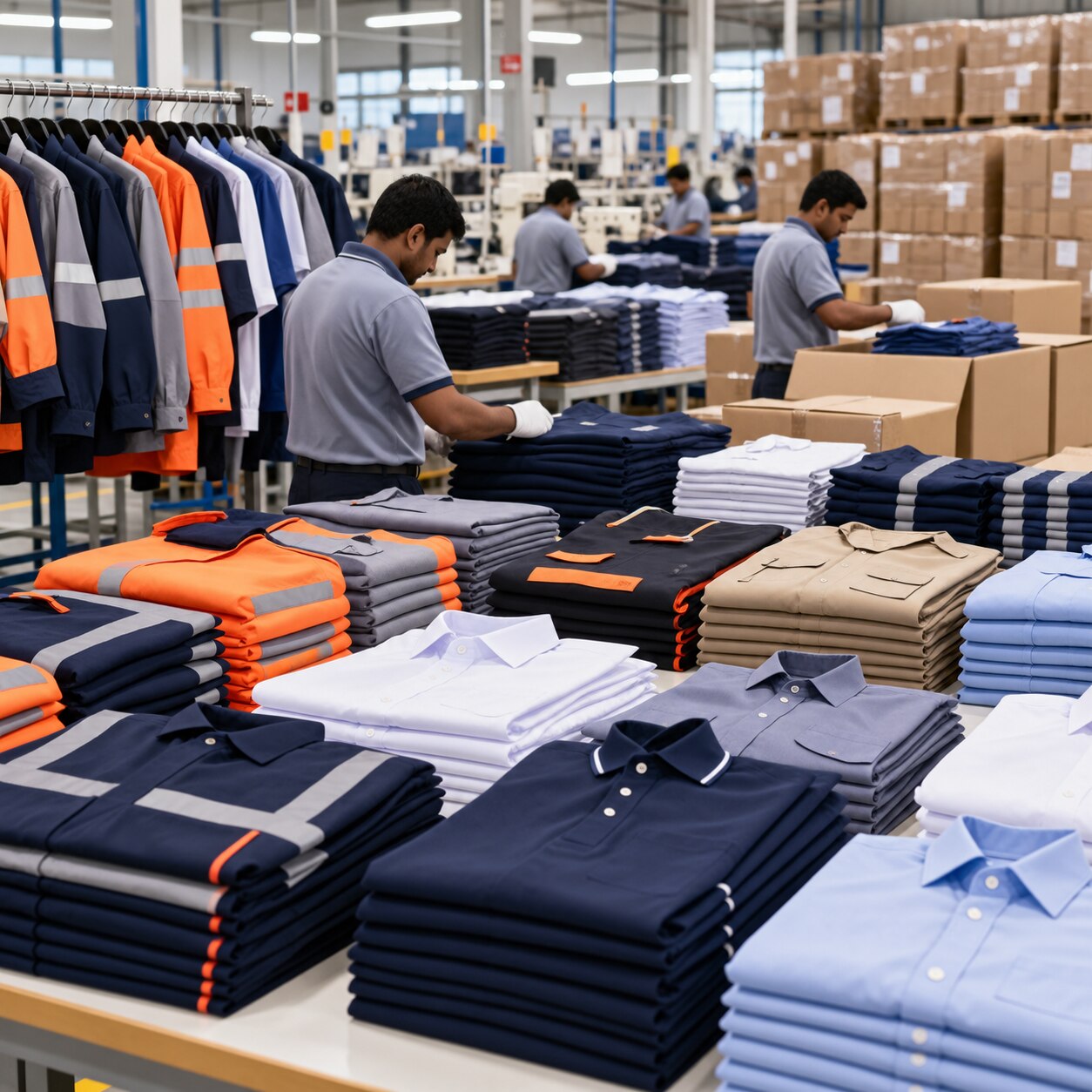
A large uniform order succeeds or fails before the first carton leaves the factory. You need a shortlist based on usable capacity, measurable garment specifications, verified samples, controlled sizing, and quotation terms that expose the real delivered cost.
Key takeaways
- Match suppliers to headcount, garment types, locations and delivery dates.
- Request production capacity, lead times and repeat-order controls before discussing price.
- Inspect fabric swatches, stitching samples, colour references and quality records.
- Reconcile measurements, quantities, inspection results and carton labels before dispatch.
Start with a shortlist that reflects your workforce, not just your location
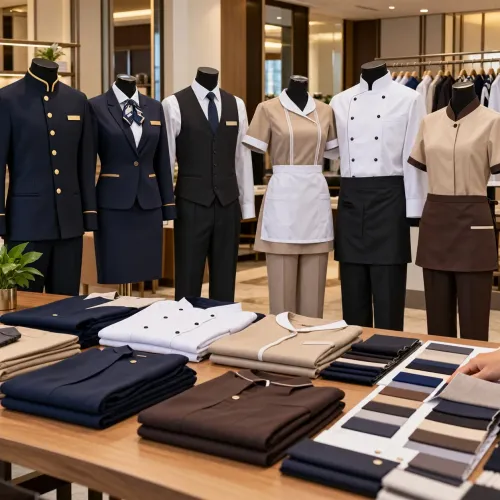
A search for bulk uniform manufacturers Bangalore is only a starting point. A credible Bangalore uniform manufacturer shortlist should reflect your headcount, garment types, delivery schedule and operating locations—not merely the supplier’s registered address.
Ask each candidate for evidence in these areas:
- Experience supplying a large workforce close to your required quantity, with references for comparable shirt, trouser, safety-wear or service-uniform programmes.
- The actual manufacturing address, subcontracted operations, dispatch point, tax-invoice entity and escalation contact.
- A sampling process that covers fabric, colour, construction, embroidery or printing, size grading and laundering.
- Capacity by month, production lead time, maximum order volume and the process for repeat orders.
- A written quality plan covering measurement tolerances, shade matching, rejected garments and replacements.
- A traceability method linking finished cartons to fabric lot, shade, cutting bundle and production batch.
Do not shortlist a supplier as a large workforce uniform supplier because its office is in Bangalore. A local stitching unit can still depend on interstate fabric, trims and transport. Treat a bulk workwear supplier as worth evaluating only when it can show how your order will be produced, identified, inspected and replenished.
Request a measurable bill of materials rather than accepting “cotton” or “premium fabric”; fibre composition, GSM tolerance, construction, finish, trims and allowed substitutions belong in the comparison.
Verify capacity, lead time and repeat-order control before negotiating price
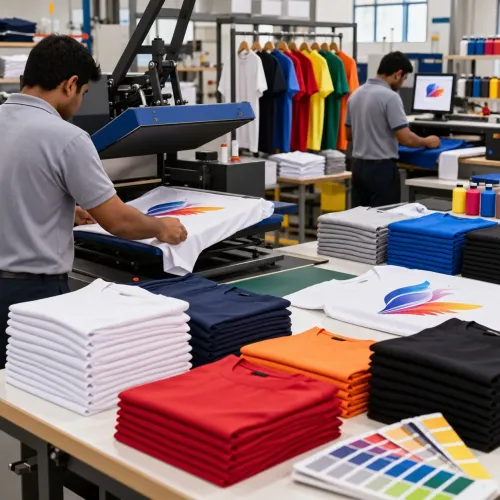
A credible supplier proves available capacity with order-specific documents, not a headline number for uniform production capacity. Ask for a production schedule for uniforms that shows fabric booking, dyeing, cutting, embroidery or printing, stitching, finishing, inspection and dispatch, with dates and named subcontractors.
1. Request the uniform manufacturing lead time for your quantity and size mix, then ask what happens if shade approval, specialised trims, outsourced embroidery or rework slips. A supplier that cannot identify these dependencies has not demonstrated delivery control.
2. Ask for evidence of comparable workforce orders: quantity, size range, garment types, delivery dates and a contactable business reference. Do not accept a monthly output figure unless the supplier states the portion available for your order and the machines, people and shifts assigned to it.
3. Approve a complete pre-production garment and a size set covering the smallest, middle and largest required sizes. Put the measurement chart, measuring method, point-of-measure tolerances, outlier-size treatment and remake responsibility into the purchase specification; incorrect size data can otherwise become a dispute after cutting starts.
4. Test repeat uniform orders before signing. Require a retained approved sample, fabric and colour references, pattern or size records, reorder pricing validity, minimum reorder quantity and a named contact who can reproduce the same specification six months later.
For a Bangalore supplier such as Colors Inc, record the actual stitching address, dispatch point, tax-invoice entity and any outsourced operation. That trail exposes transport dependencies and tells you who owns a late carton or rejected batch.
Related service
college uniforms We undertake uniforms stitching for both men and Women View service → |
Compare fabric, construction, colour and quality controls with physical evidence
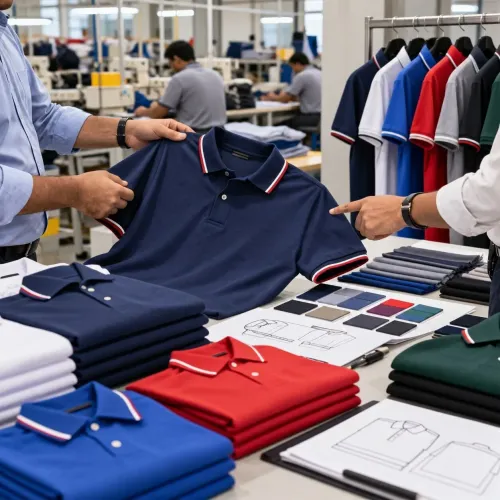
Reject any comparison based on a fabric swatch or showroom sample alone. Order identical trial garments from each manufacturer, wash them through your intended process, and compare measurements, opacity, seam behaviour, colour and trim retention before approving bulk production.
| Check | Physical evidence | What it reveals |
|---|---|---|
| Fabric | Bill of materials stating fibre composition, weave or knit, finish and GSM tolerance, plus pre-wash and post-wash measurements | Whether the promised specification survives laundering |
| Construction | Same-size garments turned inside out, with seam allowances, stitch density, bartacks, buttonholes, zippers and label attachment visible | Garment construction quality, not showroom pressing |
| Colour | Signed physical lab dip shade approval or shade band with a defined tolerance; washing and rubbing test results to ISO 105-C06 and ISO 105-X12 | Shade consistency and resistance to separate forms of colour loss |
| Inspection | Uniform AQL inspection report, defect photographs and carton labels linked to fabric lot, shade, cutting bundle and production batch | Whether defects can be detected and isolated before distribution |
For a useful uniform fabric comparison, demand the actual test report for the fabric or garment being purchased. Check its standard and edition, laboratory, sample-conditioning details and maximum-wash limitation; “industrial” or “compliance” labels prove nothing by themselves. GSM alone does not establish durability, comfort or opacity.
Ask the supplier to show failed samples and inspection records, not only approved pieces. Without batch traceability, one colour or sizing defect discovered after issue can force you to check every carton instead of quarantining one affected lot.
Use a controlled workflow from employee measurements to inspected cartons
One wrong size file can create hundreds of exchanges across sites, while an unapproved colour or pocket position can multiply rework. Treat the order as a controlled production record, not a series of informal messages.
1. Issue one employee uniform size survey with garment measurements, not vague labels alone. Define the measuring method, measurement chart, tolerance at each point, size-assignment rules, outlier-size handling and responsibility for remakes caused by incorrect measurements.
2. Consolidate responses by site, department, role and shift, then lock a dated size matrix. Give the manufacturer one version-controlled file; late changes require written approval and a revised quantity record.
3. Order a uniform trial set covering the smallest, middle and largest planned sizes. Check collar balance, sleeve proportion, trouser rise, pocket placement, embroidery position and comfort on actual employees before production.
4. Record uniform sample approval against a signed pre-production garment, physical shade band or lab dip, artwork file and measurement tolerances. A single medium sample cannot prove that grading works across the order.
5. Require a production schedule showing fabric booking, dyeing, cutting, printing or embroidery, stitching, finishing, inspection and dispatch. Set milestone dates for shade approval, size-set review and corrections, because outsourced decoration and rework can delay a complete order.
6. Put defect definitions, inspection timing, sampling level, AQL, rejection rights, remake deadlines, payment retention and warranty coverage in the purchase order. Separate workmanship defects from employee measurement changes.
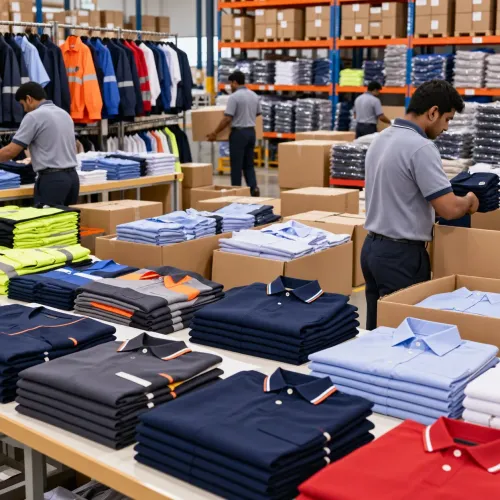
Finish with uniform inspection and dispatch: count cartons by site and shift, label each carton with its contents, retain inspection records and confirm replacements before distribution.
Make quotations comparable and calculate the quantity you actually need
Your bulk uniform RFQ should define a measurable bill of materials, not “premium cotton.” State fibre composition, weave or knit, GSM tolerance, finish, shade standard, thread, buttons, zippers, labels, packaging and permitted substitutions.
If the garment protects against a named hazard, specify the required standard, garment class, test reports and laundering limits, such as ISO 11612, ISO 20471 or ISO 13688.
Use this checklist before accepting any figure:
- Confirm whether the price covers CMT stitching, fabric plus stitching, or a fully finished garment.
- Request separate lines for fabric, dyeing, embroidery, printing, trims, alterations, reject replacements, packaging, freight and GST.
- Record MOQ, lead time, payment terms, dispatch point, tax-invoice entity and the actual manufacturing address.
- Require one complete pre-production garment and a size set covering small, middle and large order sizes; inspect grading, collar, sleeves, trouser rise and pocket placement.
- Approve colour using a physical lab dip or shade band with a stated tolerance, then record washing and rubbing fastness separately.
A useful uniform quotation comparison puts identical inclusions beside each price. Do not treat GSM as proof of durability, comfort or opacity.
Calculate quantities by employee, size and location: confirmed issues plus approved replacements plus planned spares. Your uniform spare stock calculation should reflect turnover, new hires and difficult-to-replace sizes, then account for the supplier’s MOQ and carton multiples. Keep that calculation separate from contingency padding so you know what you actually ordered.
Frequently asked questions
How should you shortlist bulk uniform manufacturers in Bangalore?
Match each supplier to your headcount, garment types, delivery schedule and operating locations, rather than selecting by address alone.
What should you verify before negotiating a uniform order price?
Ask for production capacity, first-order lead time, repeat-order controls and evidence that the supplier can meet your delivery schedule.
How can you compare uniform quality between suppliers?
Compare physical fabric swatches, construction samples, colour references and documented quality checks instead of relying on written claims.
What workflow reduces errors in a bulk uniform order?
Control employee measurements, approve samples, reconcile quantities, inspect finished garments and check labelled cartons before dispatch.
How do you compare quotations for bulk uniforms?
Put fabric, garment specifications, branding, packing, alterations, delivery, taxes and replacement terms into one comparable cost sheet.