

A school shirt, hospital tunic, hotel jacket and construction vest cannot be produced from one generic pattern because each role imposes different demands on fit, fabric, safety, laundering and appearance. By following the manufacturing workflow and evaluation points below, you can turn job requirements into a practical specification and compare suppliers before approving a bulk order.
Key takeaways
- Start with each role’s movements, hazards, customer contact and washing routine.
- Choose fabric by climate, heat exposure, laundering frequency and required protection.
- Approve a size chart, sample garment and replacement process before bulk production.
- Check sampling, quality control, delivery records and alteration support before ordering.
How manufacturers translate each industry’s work into a uniform design
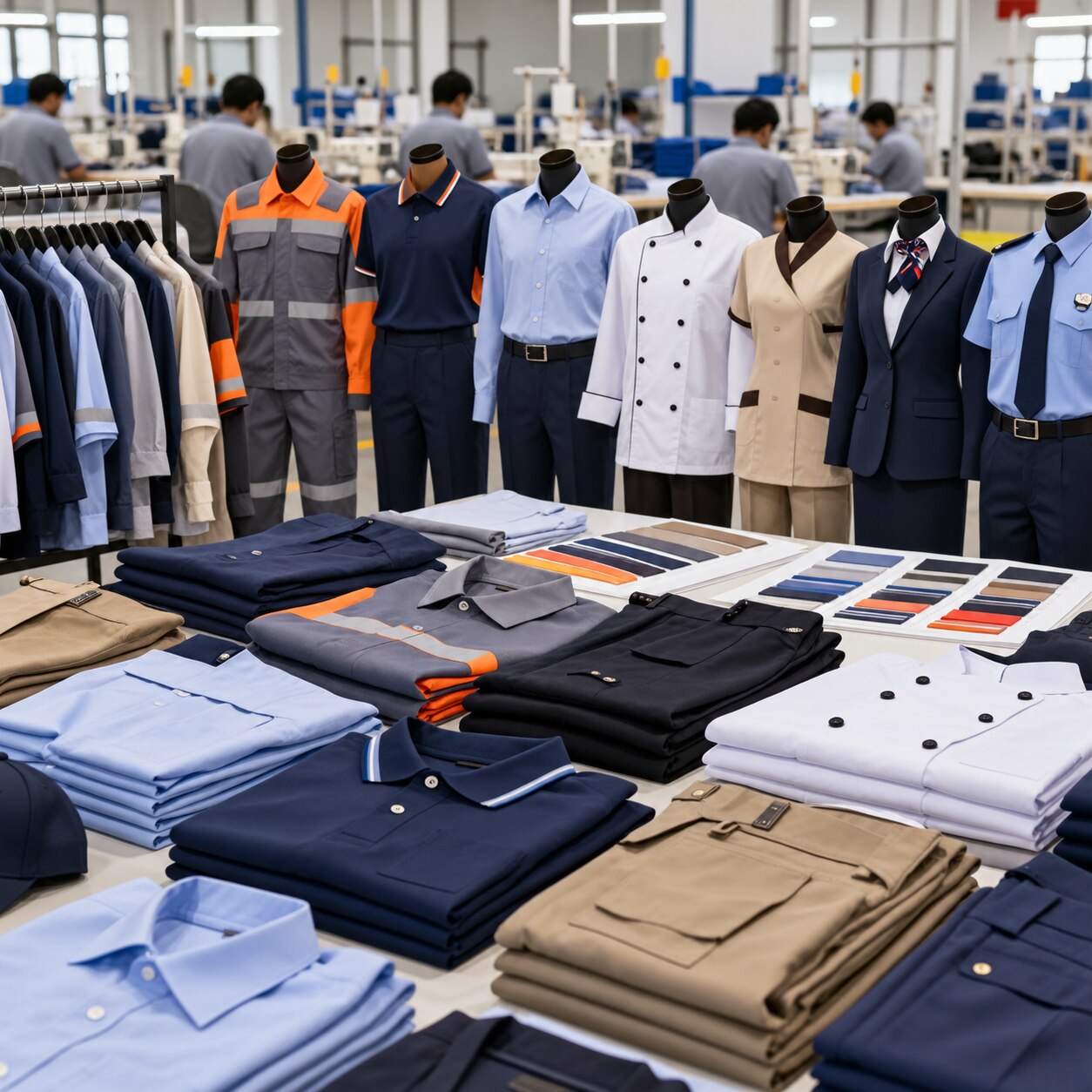
The job determines the uniform before the logo does. Industry-specific uniform design starts with movement, contact with customers, safety exposure, washing frequency and the image each role must project; one generic shirt block rarely fits every department.
| Sector | Design changes |
|---|---|
| School uniforms | Durable shirts, skirts or trousers, simple fastenings and easy-care fabrics for repeated washing and active movement. |
| College uniforms | A more mature silhouette, longer-wearing fabrics and options that accommodate varied classroom, laboratory or event use. |
| Hospital uniforms | Scrub-style access, secure pockets, fluid-resistant areas where required, low-profile fasteners and unrestricted movement. |
| Hotels | A polished front-office cut, concealed fasteners, stain-conscious fabrics and practical service garments for housekeeping and kitchen teams. |
| Offices | Formal shirts, trousers, blazers or coordinated separates with a cleaner silhouette and restrained branding. |
| Factories | Reinforced stress points, tool-access pockets, movement allowance and construction matched to machinery and workplace hazards. |
| Retail teams | Consistent colours, visible branding, comfortable standing and walking fit, plus pockets for devices or small items. |
| Security services | Clear identification, durable trousers, functional pockets and a structured appearance that supports authority and mobility. |
| Construction crews | High-visibility elements, rugged construction, ventilation and protective-clothing features suited to the task. |
| Delivery staff | Lightweight, movement-friendly layers with accessible pockets, weather coverage and branding visible from a distance. |
Manufacturers convert these needs into patterns, pocket positions, trims, closures and size ranges rather than simply changing colours. A technician needs access; a receptionist needs presentation; a construction worker needs visibility and protection.
The approved specification should record finished-garment measurements, tolerances, colour, trim and artwork. That record prevents a repeat of school uniforms, hospital uniforms or college uniforms from changing in fit or appearance without the buyer noticing.
How fabric, climate and protection requirements shape the specification
Two fabrics can share 180 GSM and behave differently. Uniform fabric selection must compare GSM with fabric composition and weave construction, yarn, finish, usable width, colourfastness, pilling, strength and dimensional change after laundering.
The Bangalore climate calls for breathable, moisture-managing fabric and ventilation for outdoor heat, while air-conditioned offices favour a denser, smarter-looking cloth that does not feel flimsy. Monsoon uniforms need colourfastness and quick drying; frequent washing demands documented shrinkage and seam durability, not a sample that survives only a domestic wash.
| Setting | Construction priority | Specification to check |
|---|---|---|
| Outdoor crews | Breathability, movement and rain practicality | Lightweight woven fabric, ventilation panels, reinforced stress points and tested visibility where required |
| Air-conditioned offices | Drape, appearance and comfort | Smooth weave, controlled GSM, low pilling and colourfastness after laundering |
| Factories and workshops | Abrasion and task protection | Strong seams, bar-tacks, secure pockets and hazard-specific protective fabric |
| Food production | Hygiene and foreign-body control | Low-lint washable fabric, concealed fasteners, few loose accessories and approved colour zoning |
Industrial laundering needs more than domestic-wash approval. Ask for results using ISO 15797 procedures, plus shrinkage, colourfastness and seam-strength data after the planned wash cycle.
A thick cotton shirt is not flame-resistant protective clothing. Heat and flame garments need the correct technology, tested construction and ISO 11612 performance codes; ISO 13688 covers general protective-clothing requirements but does not prove hazard protection. Match chemical, high-visibility or other claims to the relevant product standard and conformity documents.
Food sites should set garment details through their HACCP or food-safety risk assessment.
The production workflow from requirements to dispatched uniforms
A written brief starts the uniform manufacturing process: garment types, quantities, wearer roles, finished-garment measurements, fabric, colours, branding, washing method, packing instructions and delivery date. Confirm measurements in centimetres with tolerances; “M” and “L” alone cannot control a bulk order.
1. Record wearer measurements or conduct a fitting session, then convert the approved body-size chart into a graded pattern for every ordered size.
2. Develop the first design or fit sample. Check movement, pocket position, sleeve length, fasteners and appearance before granting sample approval.
3. Produce a size-set sample covering the full size range. Compare chest, waist, sleeve, rise and garment length; a correct base size does not guarantee correct grading.
4. Make the pre-production sample from the actual bulk fabric, trims, labels and decoration. Approve it before cutting.
5. Inspect fabric rolls for shade, defects and usable width, then lay, mark and cut panels against the approved patterns.
6. Stitch the bulk order using controlled line operations. Record bundle, size and shade details so errors can be traced.
7. Apply embroidery, printing or heat transfers to the approved artwork position and size. Check backing, thread or transfer specification, puckering, stiffness and wash durability.
8. Inspect measurements, seams, labels, colour, decoration, stains and loose threads. Rework or reject garments outside tolerance.
9. Fold, size-sort, label and pack uniforms according to employee, department or shipment. Dispatch only after carton quantities, address, transport documents and delivery schedule are verified.
For industrial laundering, test the finished garment against the intended process, using ISO 15797 procedures as a reference rather than relying on domestic-wash approval.
How suppliers manage garment options, sizing and employee replacements
Choose a catalogue uniform when speed, proven sizing, and low alteration risk matter. Choose a modified ready-made uniform when you need a standard block with different pockets, trims, sleeve lengths, or branding. Specify a custom uniform pattern when one generic block cannot provide the movement, protection, or appearance required by the role.
| Option | Best use | Main control |
|---|---|---|
| Catalogue uniform | Fast rollout and straightforward roles | Confirm available sizes, fabric, colour, and decoration |
| Modified ready-made uniform | Standard garment with role-specific changes | Approve every alteration on a sample |
| Custom uniform pattern | Distinct fit, function, or identity | Test the graded pattern across the full size range |
Control bulk uniform sizing with finished-garment measurements, not labels such as M or XL. Give the supplier a body measurement chart and tolerance, then check chest, waist, sleeve, shoulder, rise, and garment length. Grading can introduce errors even when the base-size sample fits.
Approve these checkpoints before cutting:
- Design or fit sample for silhouette and movement
- Size-set sample covering every ordered size
- Pre-production sample in bulk fabric, trims, labels, and decoration
Keep one sealed reference garment with the signed measurement, colour, trim, and artwork specification. For replacements, record each employee’s approved size and issue date, then match the reference before ordering. Record fabric lot numbers and approve a shade band so a later batch does not produce visibly different panels.
How to evaluate a Bangalore uniform manufacturer before placing the order
Do not approve a bulk order from one attractive sample. A reliable uniform manufacturer evaluation checks whether the same specification survives grading, production, washing, decoration and reorders.
| Check | Evidence to request | Warning sign |
|---|---|---|
| Sample control | Design or fit sample, size-set sample, and pre-production sample in bulk fabric | One sample approved for every size |
| Construction | Seams, bartacks, buttonholes, pockets and stress points match the specification | Loose threads, uneven stitch density or unreinforced strain areas |
| Colour consistency | Fabric dye-lot records and a signed shade band before cutting | “Same colour” promised without lot control |
| Testing | Shrinkage testing after the intended wash; ISO 15797 reference for industrial laundering | Domestic-wash results used for workwear |
| Capacity | Cutting, inspection, embroidery or printing, stitching, finishing and packing plan | Only sewing-machine capacity discussed |
| Delivery | Size-wise production schedule, inspection date and dispatch date | A single delivery promise with no checkpoints |
| Repeat orders | Sealed reference garment and signed measurement, colour, trim and artwork specification | Reliance on the old purchase-order number |
Ask for the size set covering every ordered size. It exposes grading errors that a medium sample hides. Check chest, sleeve, trouser inseam, pocket position and decoration placement against the approved measurement sheet.
Before signing, confirm who records rejected pieces, handles replacements and stores patterns and embroidery files. For a programme such as Colors Inc’s college-uniform work, these controls matter when students join mid-year and reorders must match the original batch.
A supplier that cannot show these records may still sew a good first batch, but it cannot prove consistency at scale.
Related service
college uniforms We undertake uniforms stitching for both men and Women View service → |
Frequently asked questions
How do uniform manufacturers design uniforms for different industries?
They map each role’s movement, customer contact, safety exposure, washing frequency and presentation needs before selecting garment styles and features.
How do fabric and climate affect uniform specifications in Bangalore?
Manufacturers balance breathability, durability, colour retention, laundering demands and protection requirements against Bangalore’s working conditions.
What happens during the uniform production workflow?
The process moves from requirements and design approval to fabric selection, sampling, sizing, bulk stitching, quality checks and dispatch.
How should suppliers manage uniform sizes and employee replacements?
Use an approved size chart, role-based garment options, recorded employee measurements and a clear process for new joiners, replacements and alterations.
How can you evaluate a Bangalore uniform manufacturer before ordering?
Review the supplier’s sampling process, stitching quality, fabric information, size controls, production capacity, inspection steps and replacement support.