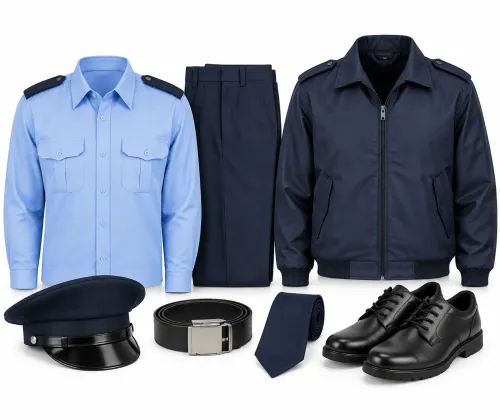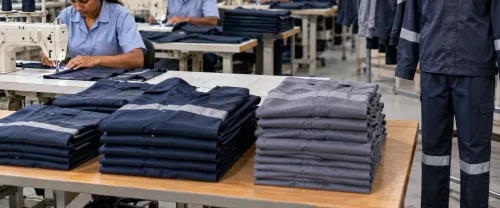



Industrial workwear has to perform differently from ordinary office clothing. Employees may spend long shifts around machinery, production lines, warehouses, assembly areas, maintenance zones, or material-handling operations. Their uniforms therefore need to be selected according to actual workplace requirements.
When evaluating factory workwear manufacturers in Bangalore, procurement and operations teams should begin by understanding the tasks employees perform rather than starting with colours or garment styles.
Start With the Working Environment
Factories across Bangalore and Karnataka operate in industries ranging from engineering and electronics to food processing, packaging, automotive components, pharmaceuticals, and general manufacturing.
Each environment creates different uniform requirements.
Employees working in relatively clean assembly areas may need lightweight shirts and trousers, while personnel performing maintenance work may require more robust garments. Warehouse teams may prioritize unrestricted movement, and organizations with multiple departments may need colour-coded uniforms.
A useful assessment should consider:
- Indoor and outdoor exposure
- Typical working temperature
- Level of physical activity
- Frequency of garment washing
- Contact with dust or dirt
- Need for pockets or utility features
- Department identification requirements
Where specialized protective clothing is required, applicable workplace safety requirements should guide the specification rather than relying on a standard uniform alone.
Durability Is About More Than Fabric Thickness
Heavy fabric is not automatically durable workwear.
Garment life also depends on stitching, seam construction, fabric composition, reinforcement at stress areas, fastening quality, and how frequently the clothing is washed.
For employees who bend, stretch, lift, or operate equipment throughout the day, areas such as pockets, shoulders, side seams, and trouser construction deserve particular attention.
A good workwear specification balances strength with wearability. An unnecessarily heavy uniform can become uncomfortable during long shifts.
Comfort Affects Everyday Use
Even a well-made uniform is ineffective when employees find it difficult to work in.
Fit should provide enough room for normal job movements without becoming excessively loose. Fabric should also suit the workplace temperature and activity level.
For factories in Bangalore, seasonal conditions and the amount of ventilation within the facility can influence fabric selection. Production floors with high employee activity may require different garments from air-conditioned manufacturing or inspection areas.
Trial garments can help organizations evaluate comfort before approving a large production quantity.
Department Identification Can Be Built Into the Design
Factories frequently need employees from production, quality, maintenance, warehouse, housekeeping, and supervisory departments to be identifiable.
This does not require completely different uniforms for every team.
Organizations can use controlled variations such as:
- Different shirt colours
- Contrast collars
- Department embroidery
- Colour-coded piping
- Supervisor-specific garment details
Keeping the core uniform consistent while changing selected visual elements can simplify procurement and inventory management.
Plan Uniform Quantities Around Actual Usage
One uniform per employee is rarely practical where garments are washed regularly.
Procurement teams should consider shift patterns, laundry cycles, employee turnover, emergency replacements, and expected workforce growth before deciding quantities.
Maintaining a small buffer can also prevent delays when new employees join.
For organizations working with factory workwear manufacturers in Bangalore, clear specifications make procurement considerably easier. Buyers should document garment design, fabric, sizing, branding, quantities, packaging, and future repeat-order requirements before production begins.
Colors Inc supplies customized uniform solutions for organizational requirements in Bangalore, including industrial and factory applications. The appropriate specification, however, should always begin with the conditions employees face at work.
Industrial uniforms are used repeatedly, often under demanding conditions. Treating workwear as an operational requirement rather than simply branded clothing helps businesses select garments that support employees, simplify identification, and maintain a consistent workplace appearance.